How to Find and Restore a Vintage Lane Cedar Chest as a Coffee Table
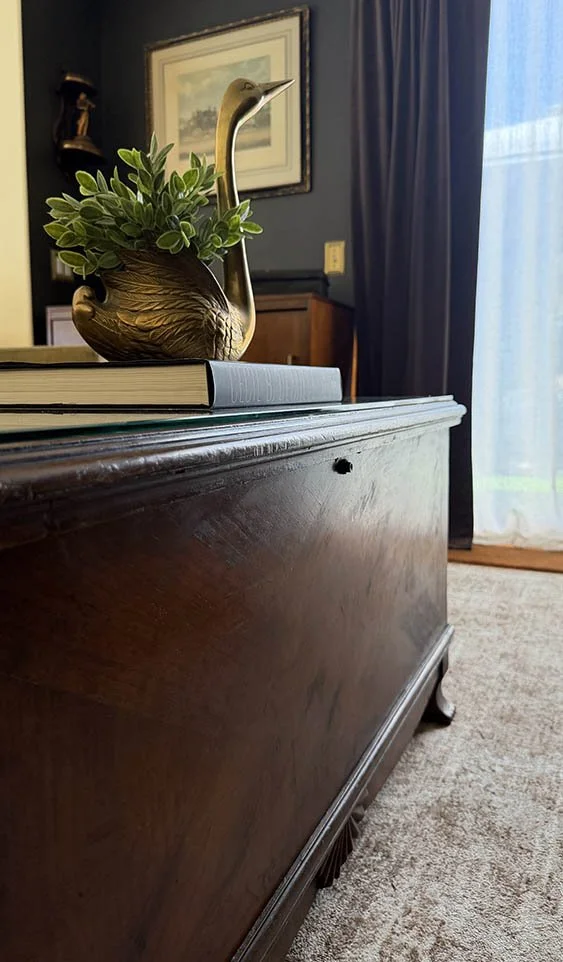
The glass coffee table worked. It held books and drinks and fit the room, and every time I walked in, something felt unfinished. Everything around it had age and texture. The glass had neither.
What finished the room was using a cedar chest as a coffee table, a vintage Lane made in 1934 that now sits where the glass used to. If you want real weight and history at the center of a room, an old one can give you both, with storage built in. Here is how I found mine, what to check before you buy one, and how I brought it back without sanding a single inch.
The one I almost left behind
I looked at tables for weeks. Nothing on Facebook Marketplace or in the antique stores I tried was right. The legs made everything too tall, or the piece felt too new.
Then, in a back room of an antique store, I saw a shape under a pile of other things: dark wood, long and low, the right age and the right length. I asked the man at the counter to help clear it off.
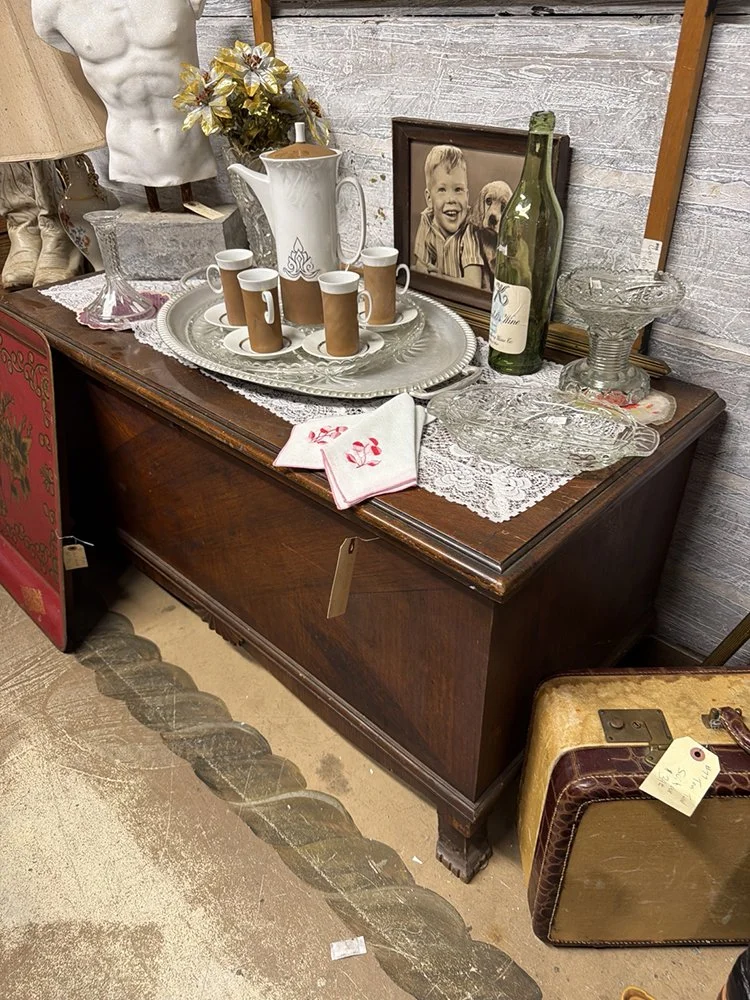
It was beautiful and heavily scratched. I knew nothing about repairing wood damage that deep, and I couldn't tell whether the back would hold up in the middle of a room. So I left.
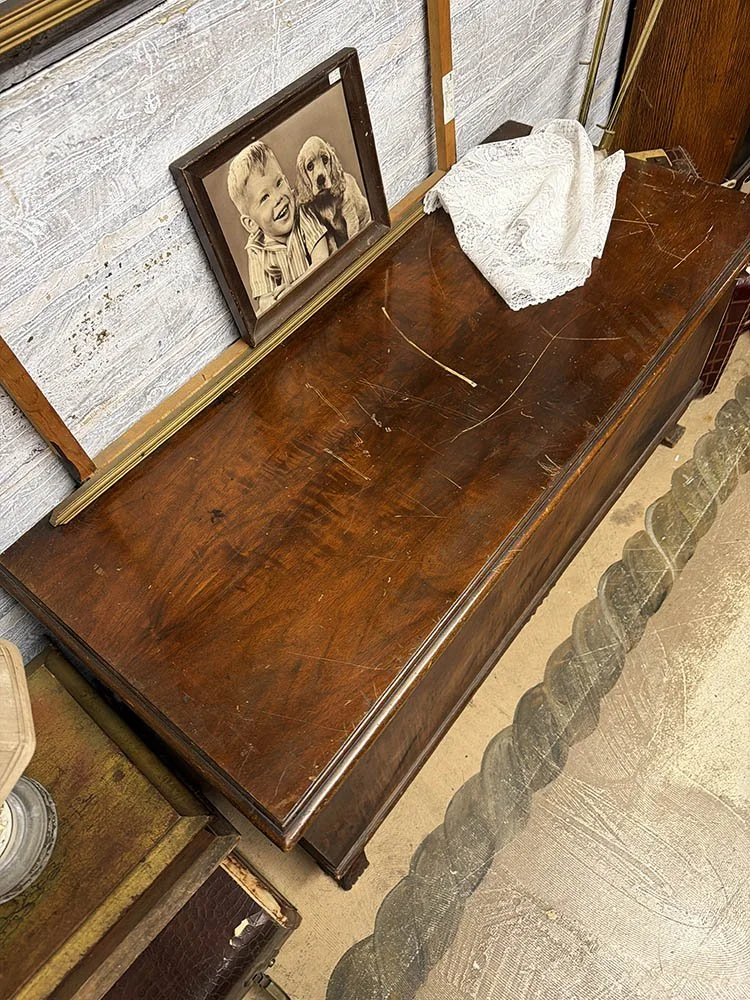
For the next few weeks I kept looking and kept thinking about it. Eventually I drove back, half certain it was gone. It was still there, still buried, and I bought it.
What was inside
I didn't open the lid fully until I decided to buy it. The cedar interior was clean, with a little dust and a faint cedar scent. Inside the lid was the original paperwork: a red arrow promising a moth insurance policy with every Lane chest, and an Aetna card insuring the contents against moth damage. The chest had been tested under air pressure for what Lane called "aroma-tightness."
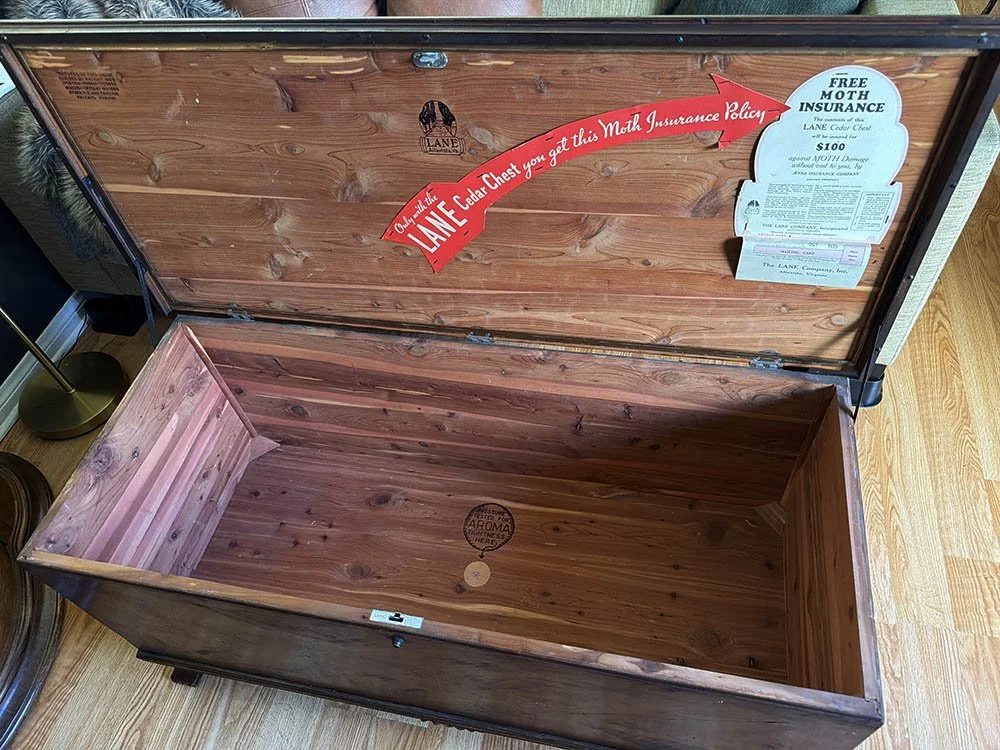
At the bottom of the card is a mailing slip, due back to the Lane Company within 30 days of purchase, with a policy deadline stamped in blue: Oct 1935. It was never detached, and the policy was never claimed.
How to date a Lane chest
When the serial number is present, dating a Lane is unusually simple. You'll usually find it stamped on the underside. Read it backward. On mine, the stamp itself is reversed, so a quick phone photo flipped horizontally makes the numbers easier to read. Mine reads 438150, which becomes 05/18/34: May 18, 1934. Some serial numbers carry an extra digit identifying the plant. The style number is a separate code, so don't use it as a manufacturing date.
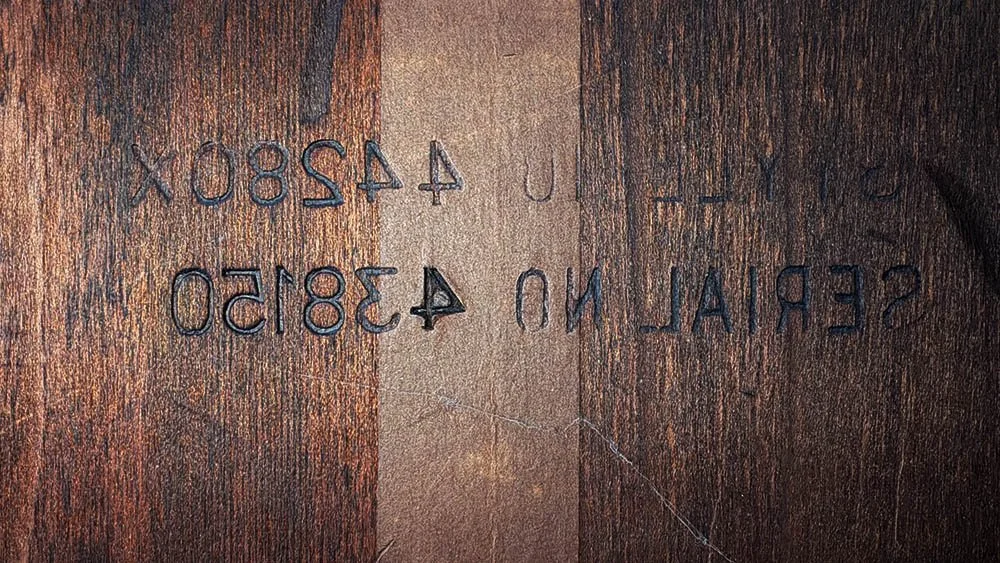
If the serial number is missing, or the numbers don't produce a sensible date, original paperwork, labels, construction, and style can help narrow the period. My moth insurance card fits the serial: its October 1935 deadline falls after the chest was made.
What to check before buying a vintage Lane cedar chest
Start with style. Some of the chests I looked at, especially newer ones, leaned farmhouse. If the proportions and finish are wrong for your room, nothing else on this list matters.
Next, confirm it's a Lane. Look for the logo inside the lid, original labels, and the style and serial numbers underneath.
Then walk all the way around it. A chest was built to sit against a wall or at the foot of a bed, and as a coffee table every side will show. Look at the back as furniture, checking for unfinished panels, mismatched veneer, holes, or repairs.
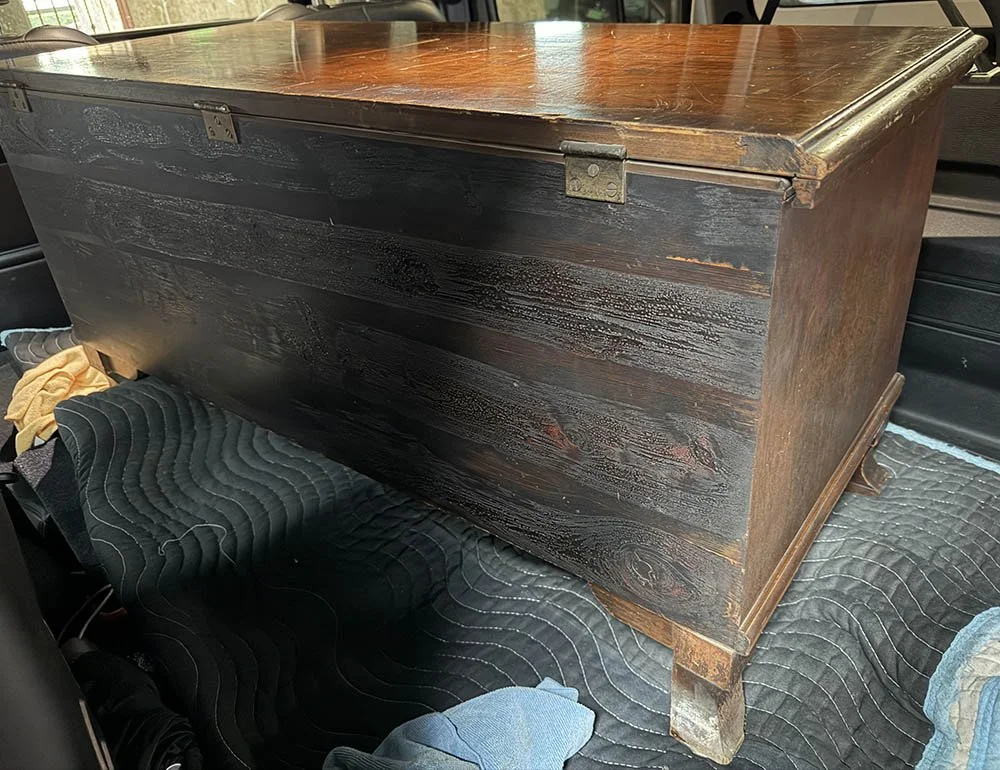
Measure width, depth, and height, including the feet and trim, and compare that to your sofa and chairs before you fall in love. Pay particular attention to height. A chest that sits well above your seat cushions starts to read as a bench in the middle of the room.
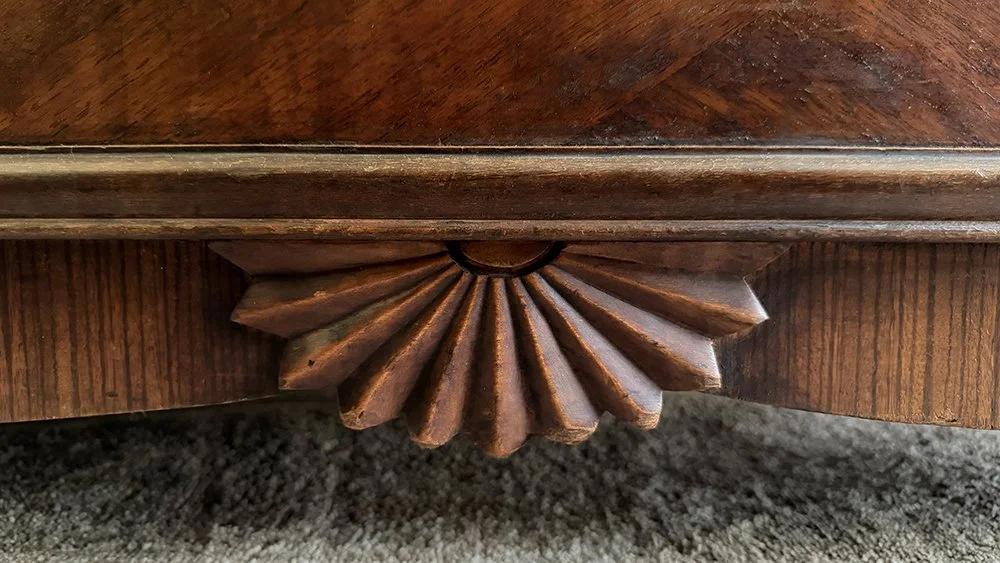
Run your fingertips over the top and sides. Scratches in the finish are one thing. Veneer that bubbles, lifts, or has been sanded through is a much bigger project. Check the base and feet for looseness or old repairs.
Open the lid slowly and look closely at the hinges and lid support. Rusted or weak hinges make a heavy lid risky every time you open it. The support should hold the lid open at any angle without letting it fall. A failing lid support is a safety issue, especially once the chest is in daily use in a living room.
Finally, look inside. The interior should be dry and sound. Check for holes, rot, water stains, mildew, insect damage, and any paint or varnish brushed over the bare cedar. A faded cedar scent is normal after decades. A musty odor deserves more investigation, especially for signs of past moisture or mildew.
The lock
Lane and Virginia Maid cedar chests manufactured between 1912 and 1987 may have old-style latches that lock automatically when the lid closes. In 1996, Lane recalled about 12 million chests, and fourteen children were reported to have died after becoming trapped inside between 1977 and 2015. Replacement locks are no longer available through the recall program. The U.S. Consumer Product Safety Commission now advises owners of affected chests to remove the old lock and latch completely.
If you buy one, check the latch before it goes anywhere near your living room.
Restoring it gently
I started by cleaning the chest with mineral spirits. If you try it, test a hidden area first to make sure the existing finish isn't affected.
I planned to follow with an all-in-one refinisher until the man at the wood shop where I bought my supplies stopped me. Not on old wood, he said, especially if I ever wanted to restore it properly later. That was enough for me to leave the original finish alone.
So I tried the careful options: a dark brown Liberon paste wax, then wax sticks. Each helped a little. None of it did what I wanted.
Then someone told me to try walnuts. It sounded absurd, but I had a bag of walnut pieces in the kitchen cabinet, so I grabbed a small handful and started rubbing. Once the oils began to come out, the scratches became far less visible. Pieces work as well as whole walnuts; they're just harder to hold. I finished by buffing with a horsehair brush.
What the walnut did remarkably well was soften the contrast between the pale scratches and the dark wood around them. The scratches were still there, but they stopped catching the light the same way. It worked on surface scratches and color loss. It won't replace missing veneer, fill a deep gouge, or repair a failed finish.
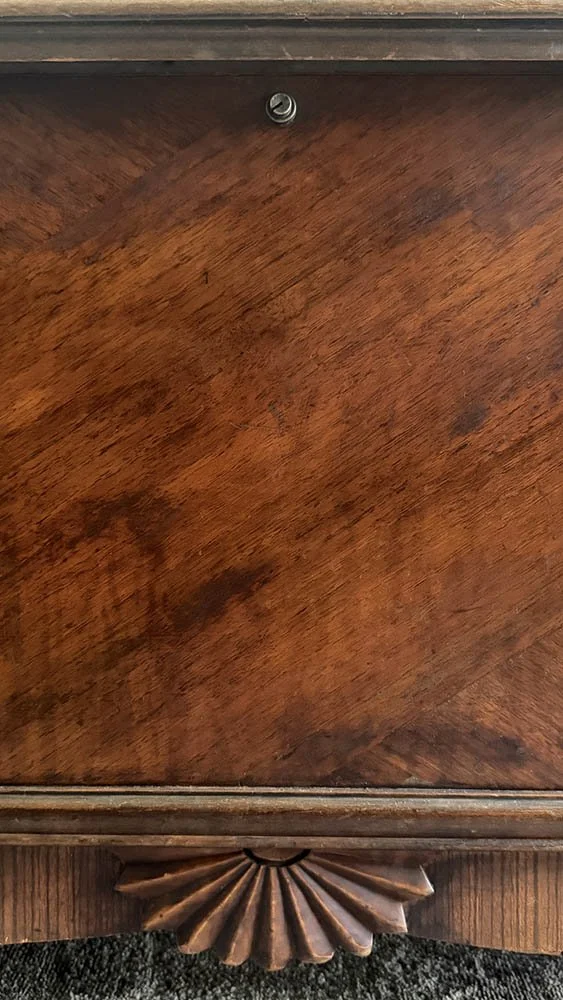
Don't reach for sandpaper. Exterior veneer on these chests can be thin, and once you sand through veneer, refinishing becomes veneer repair. Clean it, assess it, improve it gently, and refinish only if nothing else works.
That warning applies to the veneered exterior. An unfinished cedar interior is different. If its scent has faded, restorers often refresh it with very light hand-sanding. I didn't sand mine. I aired the chest out for a few days and added cedar blocks. The stale edge faded, and the cedar came forward again.
The glass, and the back
Tempered glass in the size I needed was hard to find, so I measured the lid and ordered it cut to size: 42.5 by 18.5 inches, a quarter inch thick, with polished edges and slightly rounded corners. It sits just inside the edges of the lid, on small clear bumpers, so the glass never rests directly on the wood. The slight air gap also reduces the chance of moisture becoming trapped against the finish.
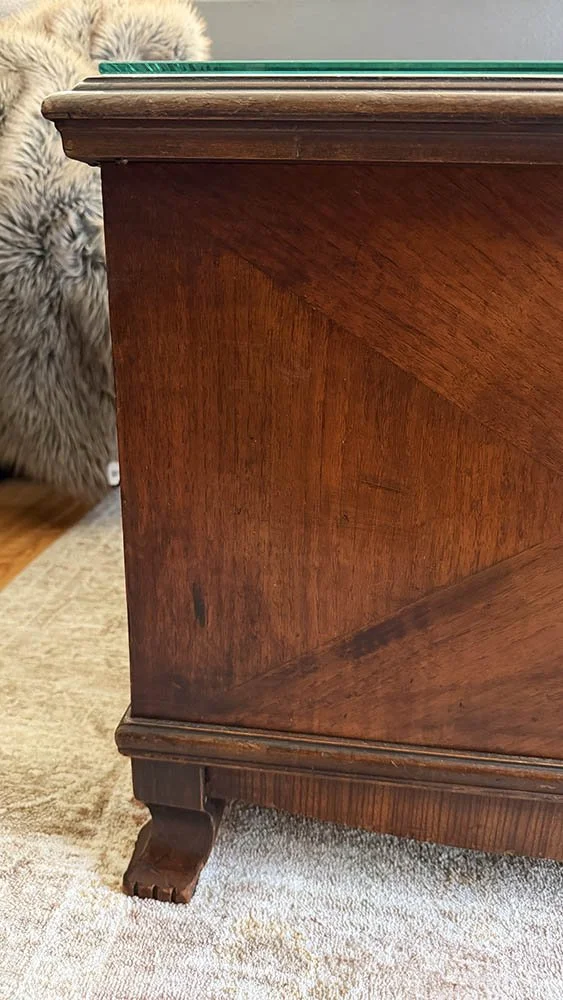
With the chest floating in the room, the back I worried about turned out to look great. The room has the age and presence it was missing, and I finally stopped looking at coffee tables.
If you're searching for a vintage Lane cedar chest of your own, you'll find a range of them on 1stDibs and Etsy.
The Dark Study holds more pieces in this register: dark wood, aged brass, and objects with a history of use. Every Journal piece from that world is gathered here, including The Room With No Modern World in It.
Know where to hunt before the weekend.
A small edit of the estate sales, auctions, and shows worth knowing about. Free every Thursday.
