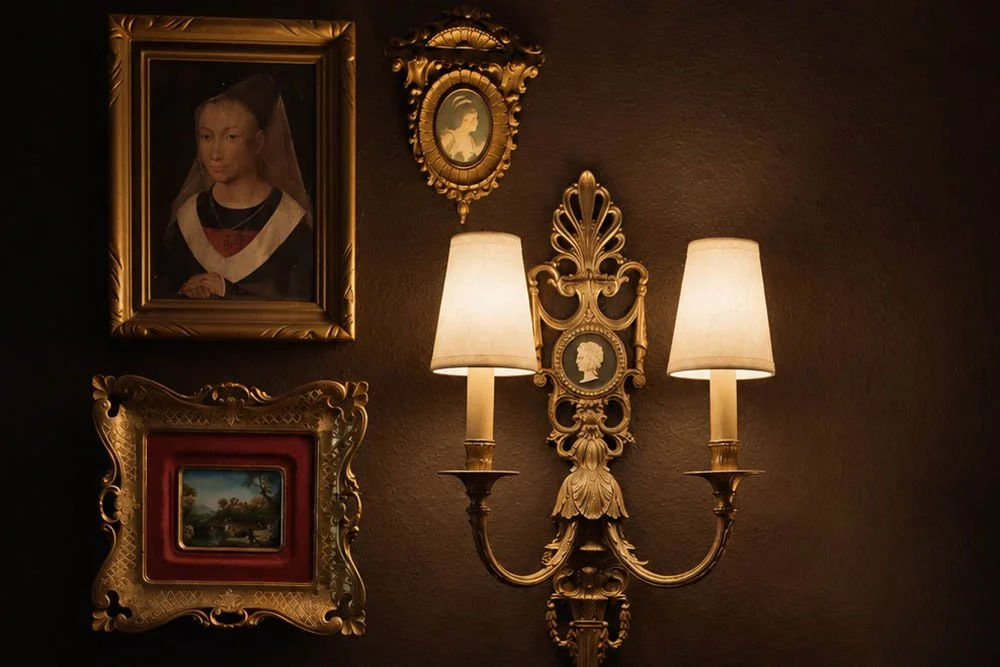
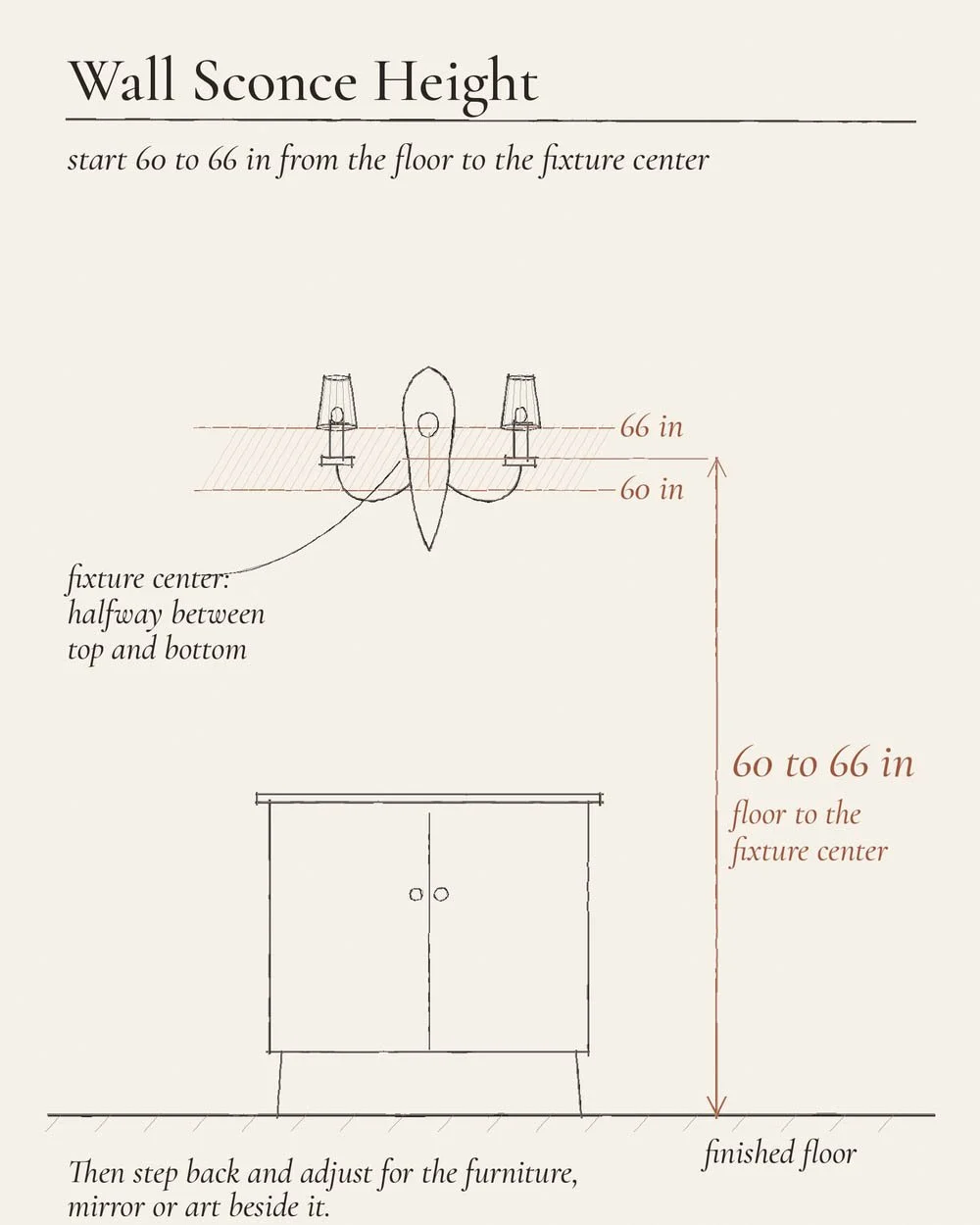
Hang most wall sconces 60 to 66 inches from the finished floor to the center of the fixture, then adjust for the furniture, mirror or art beside it. When I started learning how to hang wall sconces, I found a lot of numbers, each measured from a slightly different point. This guide puts them together: where to measure from and where to measure to, room by room.
The three points on a wall sconce
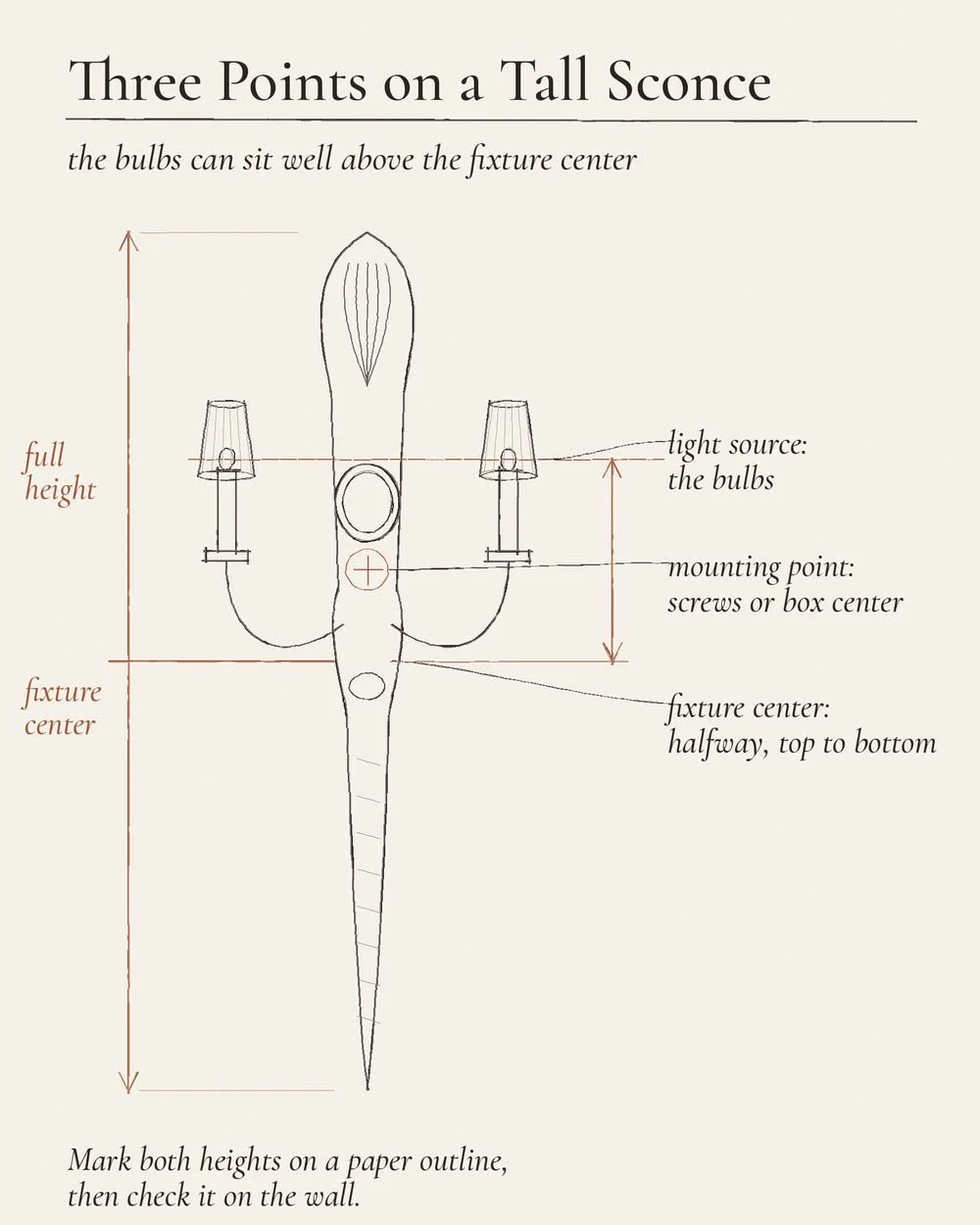
Three points on a sconce matter when you set its height:
Fixture center: the midpoint of the sconce's full height, from its highest point to its lowest.
Light source: the bulb, or the lit area on a fixture with built-in LEDs. On a candle-style sconce, the bulb sits on top of a candle sleeve, a tube shaped like a candle.
Mounting point: the screw location or electrical box center shown in the fixture's mounting diagram. The backplate is the flat piece that sits against the wall.
The shade, if the sconce has one, shields the bulb and shapes where the light goes. Some shades direct light down, some up, and some diffuse it all around.
The measurement starts from the finished floor in most rooms: the top of the final flooring, such as wood, tile or carpet. If your floors aren't in yet, add their thickness. Next to a bed, it starts from your shoulder while you sit up. On stairs, it starts from the tread, the flat part of the step you stand on, directly below the sconce.
Quick reference
Use these heights as starting points. Each room has its own section below.
| Where | Height | Measure from | Measure to |
|---|---|---|---|
| Living room, entry, above furniture | 60 to 66 in | Finished floor | Fixture center |
| Rooms with ceilings 9 ft or higher | 66 to 72 in | Finished floor | Fixture center |
| Next to a bed | 6 to 12 in above your shoulder | Your shoulder, sitting up | Light source |
| Bathroom, beside the mirror | 60 to 66 in | Finished floor | Fixture center |
| Bathroom, above the mirror | 75 to 80 in | Finished floor | Fixture center |
| Hallway | 60 to 66 in | Finished floor | Fixture center |
| Stairs | 60 to 66 in | Front edge of the tread below | Fixture center |
For decorative sconces in rooms with ceilings 9 feet or higher, try 66 to 72 inches if the higher placement suits the wall. Use the bedside and bathroom measurements for reading and grooming.
Want these heights on paper? The printable version adds a worksheet for planning your wall before you drill.
Tall sconces
On a candle-arm sconce with a long backplate, the bulbs can sit well above the fixture center. Measure to the center, and the light lands higher than you planned.
When the light source sits well above or below the center, trace the sconce on paper, mark both heights on the outline, and tape it to the wall to check. On my cameo sconce, I measured to the middle of the bulbs, because its backplate extends well below the arms.
Wall sconces in a living room and above furniture
Above a console, sideboard or bookshelf, start at 60 to 66 inches from the finished floor to the fixture center. Then step back and look at the space between the sconce and the furniture below.
Beside framed art or a mirror, start with the sconces near the middle of the piece's height, and adjust until the pair looks balanced. Hang both at exactly the same height from the floor, and the same distance from the center of whatever sits between them.
Example: a tall sconce above a bookshelf
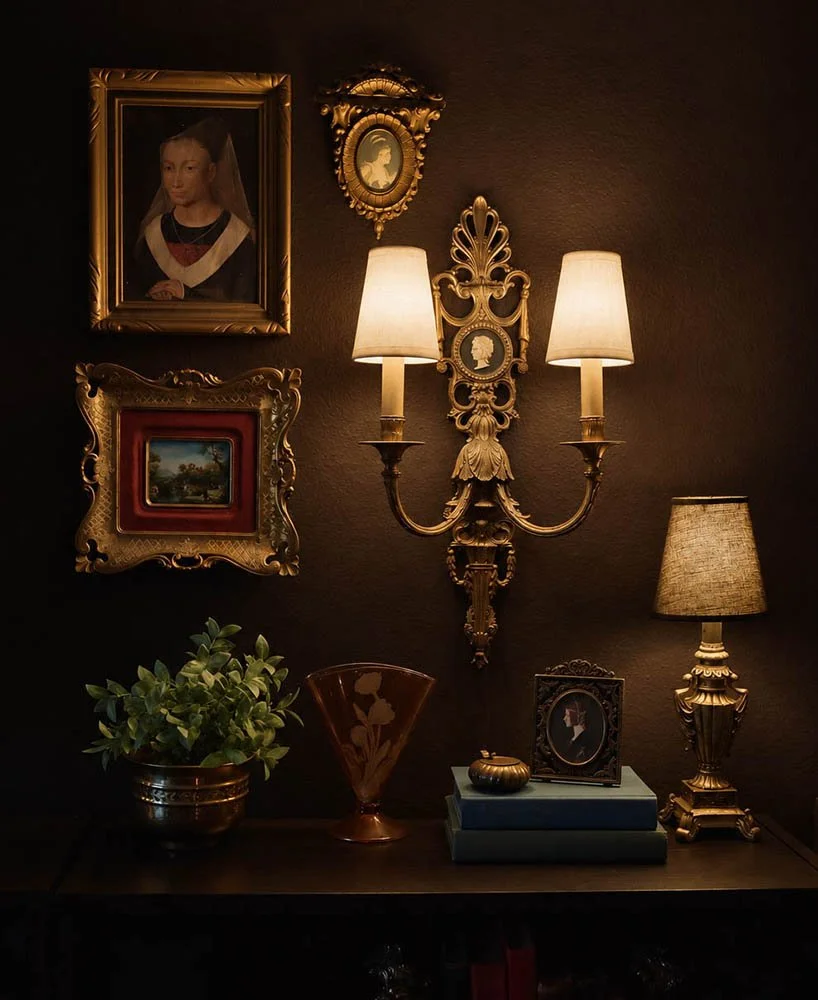
The cameo wall sconce on my gallery wall: 66 inches from the floor to the middle of the bulbs, with the bottom of the sconce 7 inches above the bookshelf.
This sconce is tall. Its backplate runs from a palmette crest down past the cameo medallion to a long tail below the arms, so the bulbs sit well above its center. Set at 66 inches to its center, the bulbs would sit several inches higher.
Example: a pair above a console
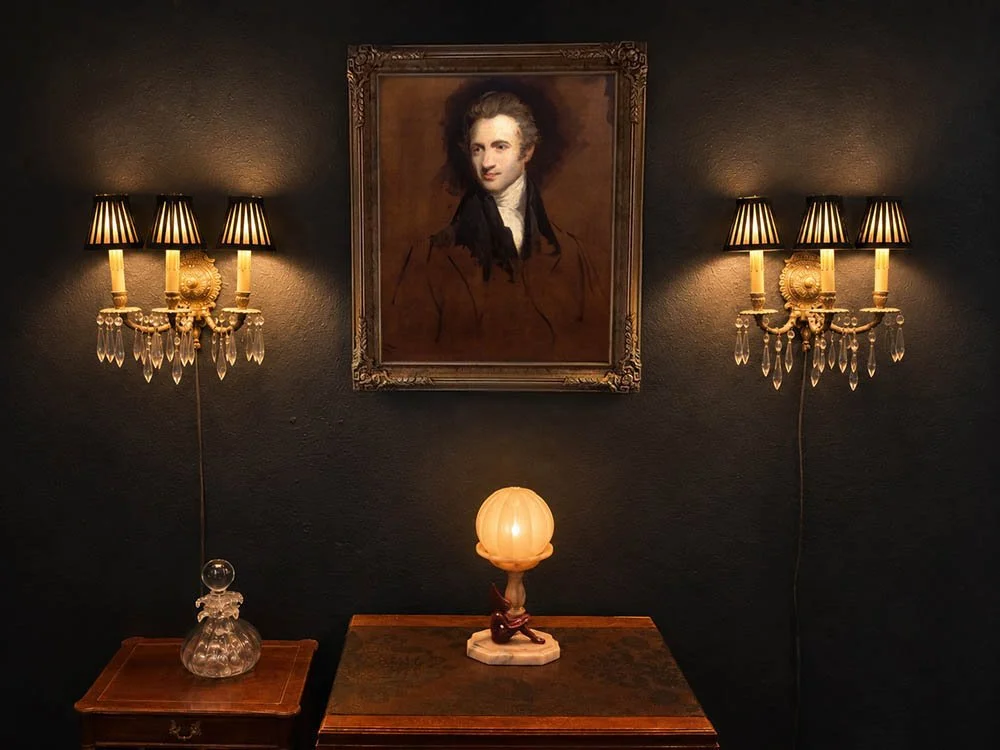
The pair above my console television: 66 inches from the floor to the center of each sconce, with the bottom of each sconce about 23 inches above the cabinet. The bulbs sit above the 66-inch mark. We liked it that way.
These three-arm sconces have crystal prisms and pleated black and gold shades. Both hang at the same height and the same distance from the portrait between them. The starting range gets you close. Your eye settles the last few inches.
Wall sconces beside a mantel
Beside a mantel, start with each sconce near the middle of the art or mirror above the shelf, and adjust until the pair looks balanced. Hang them level with each other and the same distance from the center of the mantel.
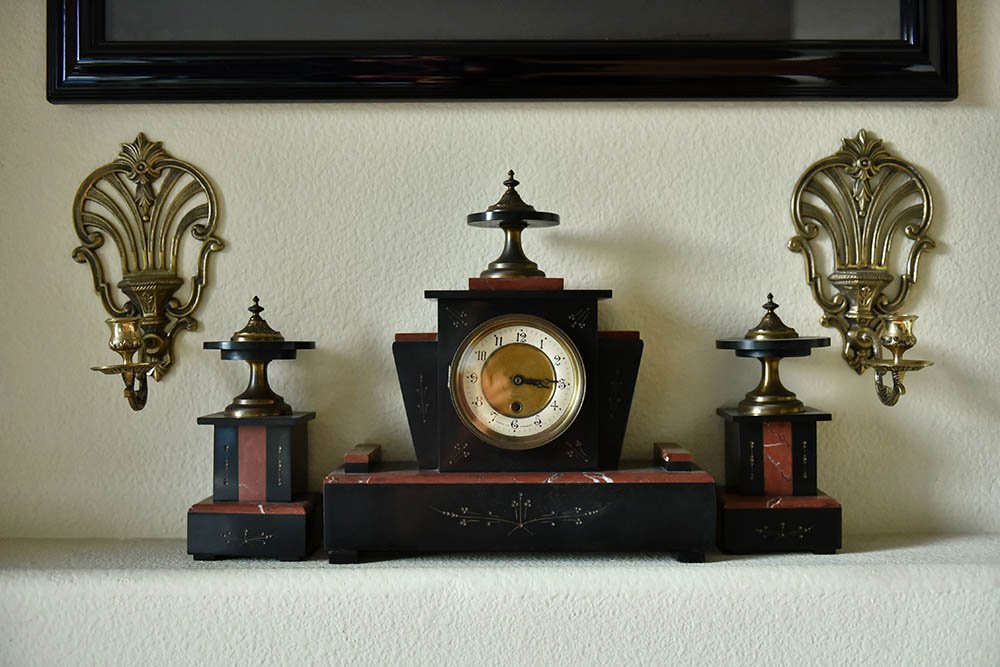
A pair of brass candle wall sconces flanking a French marble clock garniture. I leave the cups empty because a candle flame would sit too close to the frame above.
Candle sconces
Candle sconces need no wiring, which makes them the simplest sconce to hang. Each arm ends in a candle cup, the small dish that holds the candle. A lit candle needs clear space around it. The U.S. Fire Administration says to keep candles at least 12 inches from anything that burns, not to use lit candles in bedrooms, bathrooms or sleeping areas, and to consider battery-operated flameless candles.
How high to hang wall sconces next to a bed
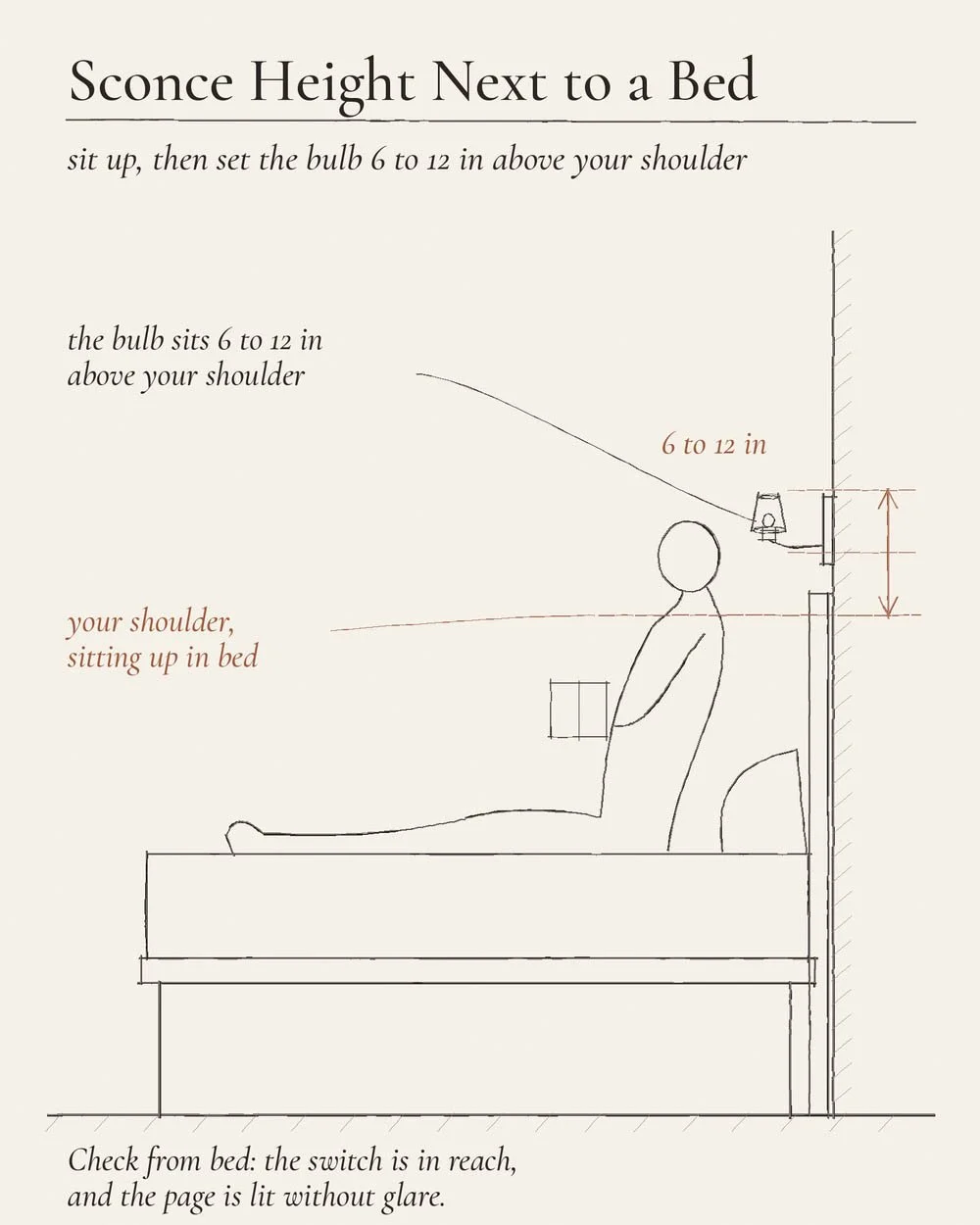
Next to a bed, start with the bulb 6 to 12 inches above your shoulder while you sit up in bed.
Sit in your usual reading position, with your pillows in place.
Have someone mark the wall 6 to 12 inches above your shoulder. That mark is where the bulb goes.
Mark the bulb and the switch on a paper outline of the sconce. Line up the bulb mark with the mark on the wall, then check from bed that you can reach the switch.
If two people share the bed, check from both sides.
If the headboard blocks the spot, try just outside its edge. Once the light is installed, check that it lights the page without glare. Keep candle sconces unlit beside a bed.
Bathroom wall sconce height
In a bathroom, place a sconce on each side of the mirror and start at 60 to 66 inches from the finished floor to the fixture center. Shaded light from both sides softens shadows across the face.
Distance from the mirror: 3 to 6 inches, from the outer edge of the mirror frame to the nearest edge of the sconce at its widest point. Keep both sconces the same distance from the mirror.
Above the mirror instead: when there is no room at the sides, center one fixture over the mirror, 75 to 80 inches from the finished floor to the fixture center. Check that the shade clears the frame.
Near a tub or shower: have your electrician confirm the location and the rating the fixture needs before you buy it. A damp rating covers steam and humidity. A wet rating covers places water can reach directly.
Hallway and stair sconces
Hallways: start at 60 to 66 inches from the finished floor to the fixture center. In a long hall, mock them up about 8 to 10 feet apart, center to center, then adjust for doorways and dark stretches. In a narrow hall, choose a sconce that sits close to the wall. A useful benchmark comes from the accessibility standards for public buildings: wall fixtures mounted between 27 and 80 inches off the floor project no more than 4 inches.
Stairs: start at 60 to 66 inches above the front edge of the tread directly below each sconce. Measuring each one this way keeps a row of sconces following the slope of the stairs. On a narrow stair, choose a shallow sconce. Before you pick the mounting point, have your installer check headroom, clear width and handrail clearance.
Plug-in wall sconces
Plug-in wall sconces follow the same heights. If a suitable outlet is within reach, a sconce designed to plug in can be mounted without adding wiring, which suits renters and older homes. Check where the cord leaves the fixture, and make sure it reaches the outlet without pulling tight.
Plan a straight cord run. In the console photo, each cord drops in a single line to its outlet.
Route the cord along the surface of the wall, clear of spots where furniture could pinch it. A plug-in cord never runs inside the wall.
To hide the cord, use a surface-mounted cover designed for lamp cords, and follow the cover and fixture instructions. A cover painted the wall color blends in. On the cameo sconce, the cord runs down behind a stack of books.
If the cord, plug or socket looks worn or damaged, have it checked by a qualified electrician or lamp repair specialist.
See plug-in brass wall lights on the Wall Lighting page, and antique wall sconces on the Antique Lighting page.
Before you drill: a five-step check
Pick your two points. Decide where you measure from (finished floor, your shoulder, stair tread) and to (fixture center, or the light source on a tall sconce).
Test with paper. Trace the sconce on paper, mark the fixture center and the bulbs, tape it to the wall at your height, then step back or sit in bed to check it.
Find the mounting point. Use the fixture's mounting diagram to see where the screws or the electrical box center sit relative to your height mark. If you want the fixture center at 64 inches and the diagram shows the electrical box center 3 inches above it, mark the box center at 67 inches.
Level a pair. Measure both sconces from the floor, then check the line between them with a level.
Plan the power. For a plug-in, confirm the outlet and the cord route. For a hardwired fixture, the backplate mounts on the electrical box. If the box is already in the wall, mark its center on the paper outline, line that mark up with the box, and check where the top, bottom and bulbs land before you buy. If it is not, settle the height with your electrician before the box goes in.