1980s Postmodern Glam Decor Ideas for a Black Lacquer Bathroom
My partner hung an ordinary wire shower caddy to hold the shampoo, nothing more. But one autumn afternoon the low light caught its grid against the white tile at an angle that made the wall look, for a second, like it belonged somewhere else. The 1980s. That was enough to go down a rabbit hole, and from there came the Pointer Sisters' "Jump (For My Love)" video, its tiled, dark, glossy backdrop lit low and architectural rather than decorative.
The first guess at naming the feeling was wrong. Memphis kept surfacing in searches, all primary color and playful shape, and none of it matched. What matched was colder: black lacquer, chrome, smoked glass, geometry with real authority. Think a fashion executive's penthouse bathroom circa 1985, not a toy shop.
That's 80s postmodern glam, and it's harder to shop for than the search results suggest. Search results for "1980s" tend to favor the decade's most recognizable visual shorthand, which usually means Memphis prints and cliché reproductions leaning hard on primary color and squiggle. The colder, architectural half of the decade gets buried underneath that. That gap is exactly what sent this search sideways for weeks before landing anywhere useful, and it's the reason this piece exists.
A statement piece and a vignette need different things
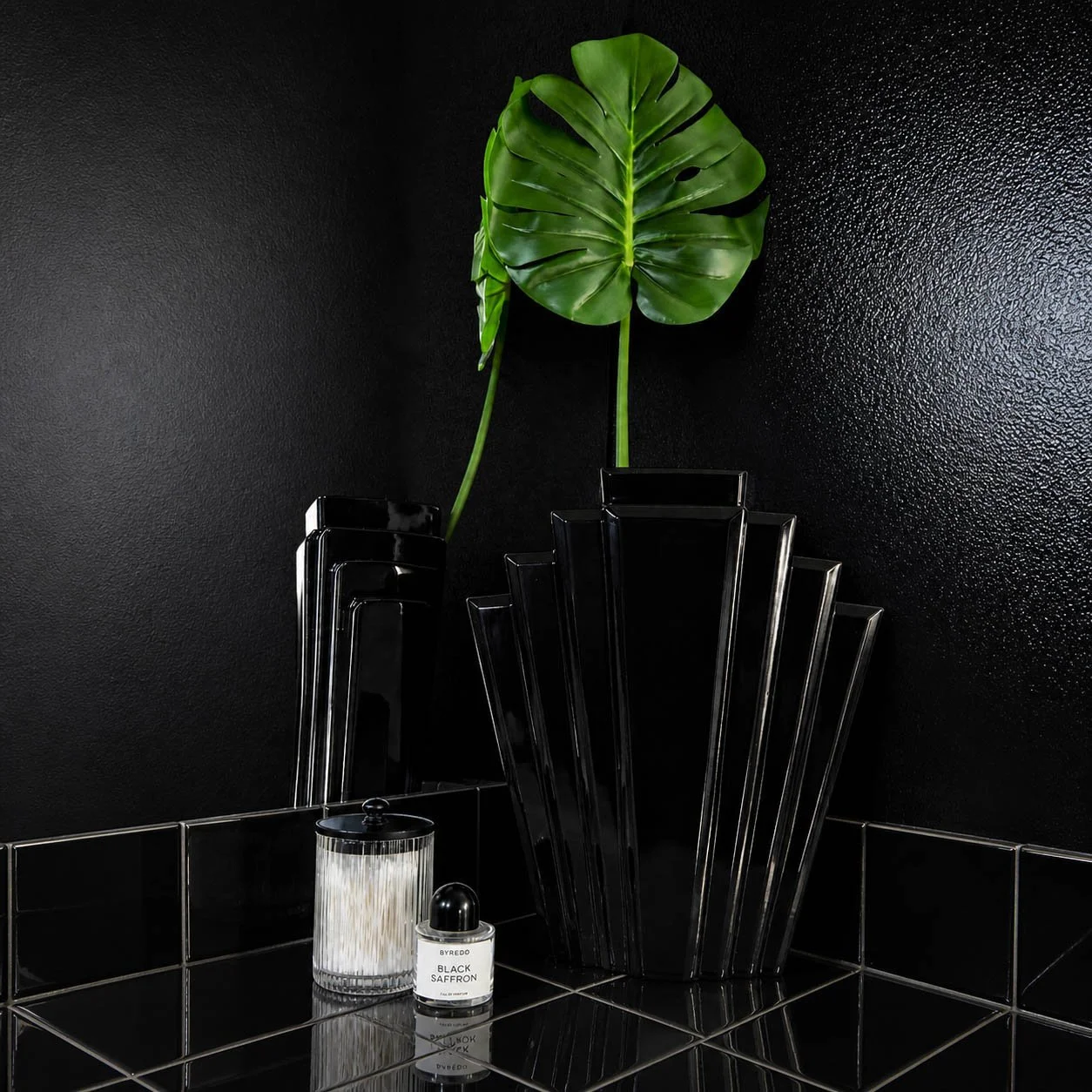
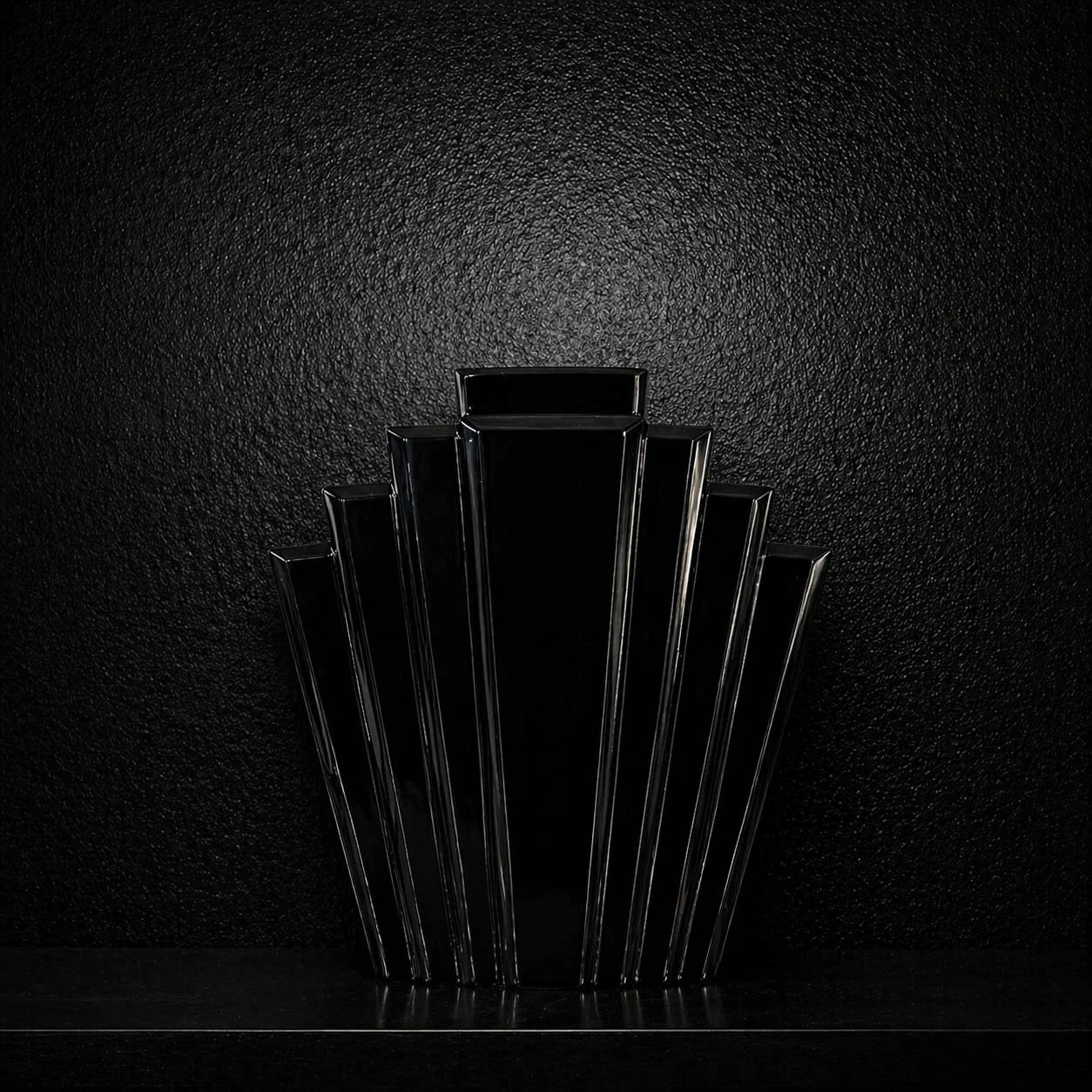
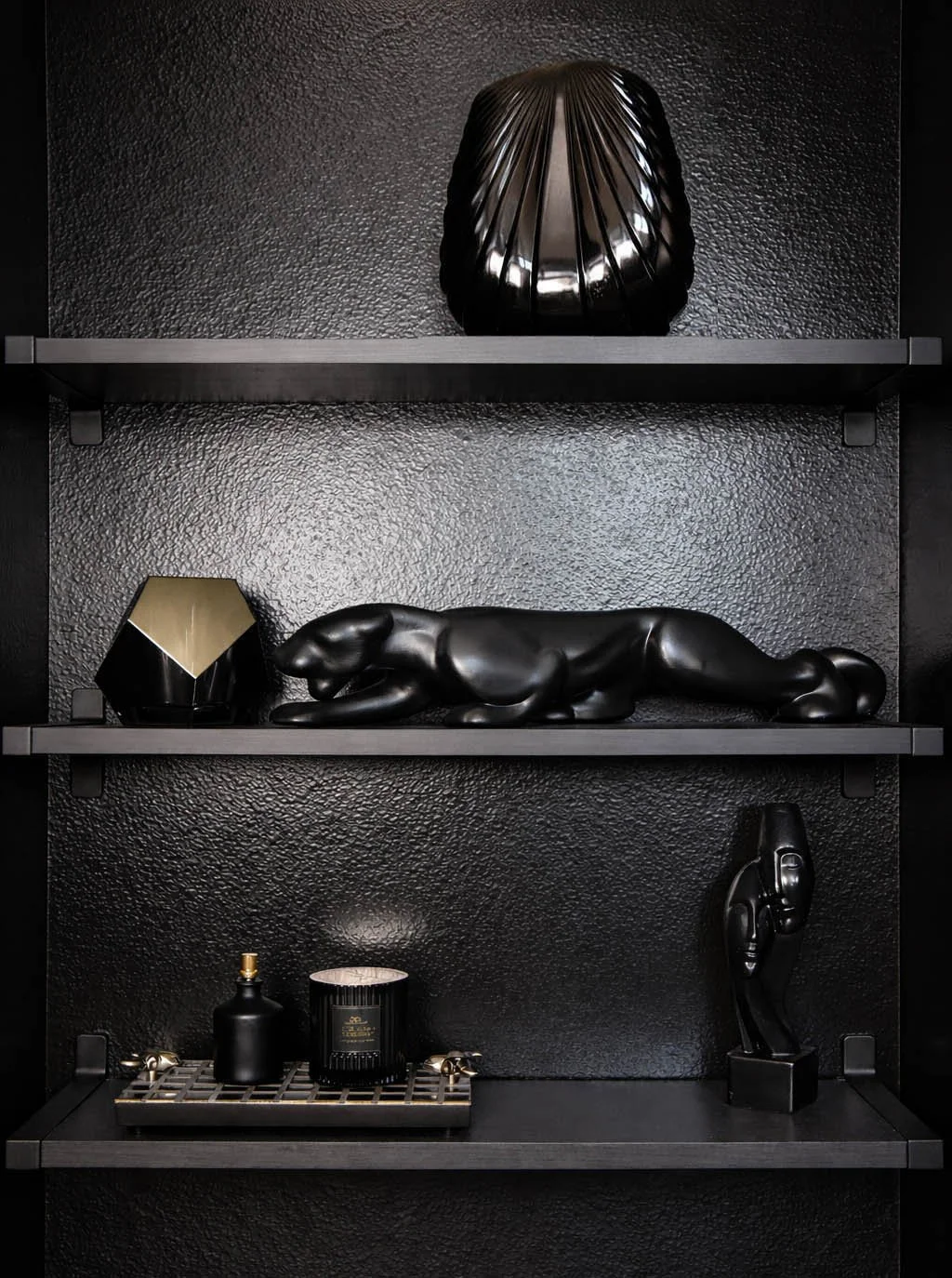
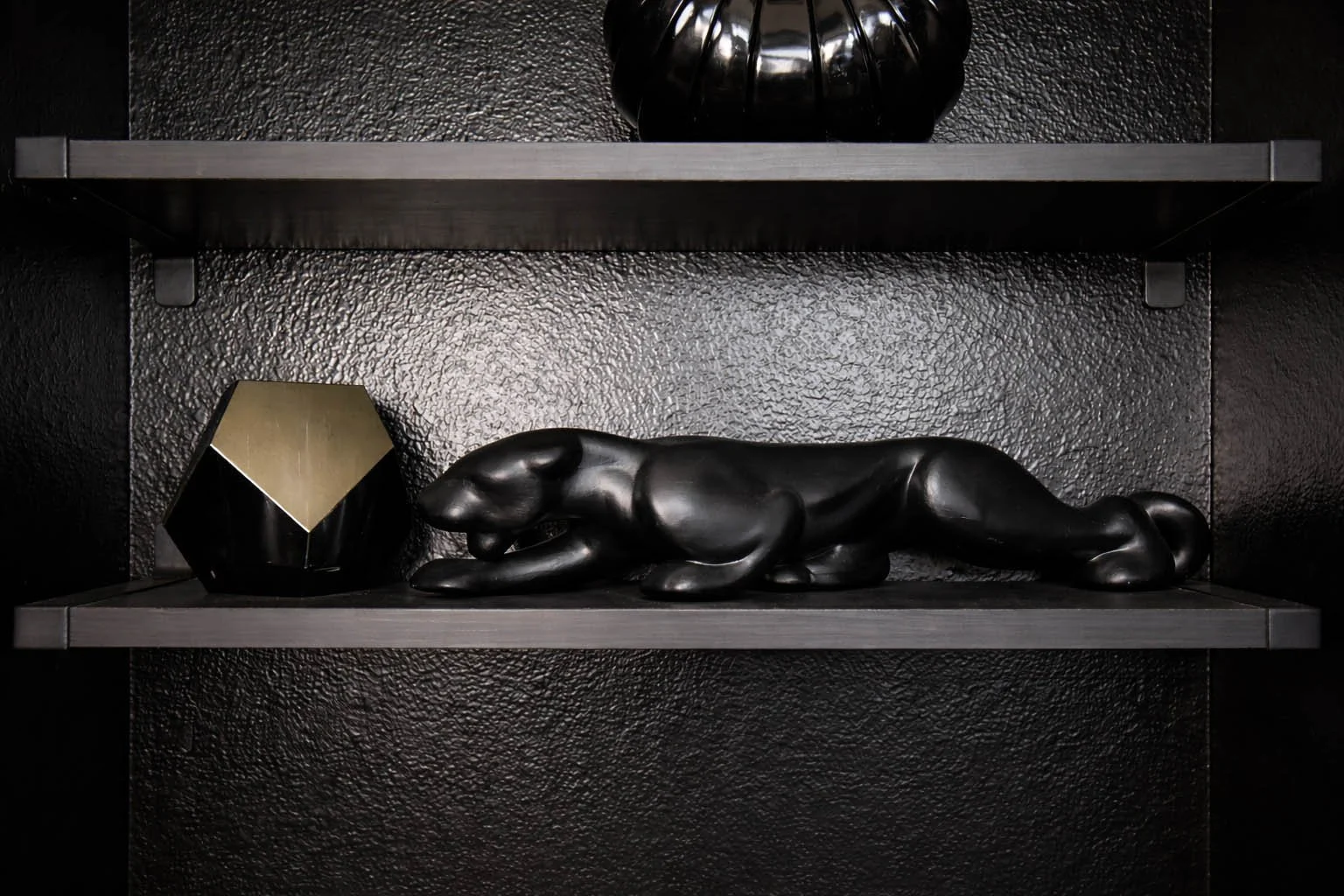
A fan-shaped vase sits alone on the bathroom counter, black, sharply geometric, striking enough to carry the whole space by itself. That's what a statement piece needs: one strong silhouette with nothing competing for attention around it. A separate grouping lives on a nearby shelf, anchored by a panther found resting alone at an antique store, its finish painted over at some point by someone who likely didn't recognize the original glossy black underneath. The shape survived the paint job. Around it sits a faceted glass candle holder found later at a thrift store. A vignette like this asks for something different than the vase does: several objects in different materials that share the same visual language without technically matching. Black lacquer beside chrome beside brass beside smoked glass. None of it has to match. All of it has to agree.
A genuinely great vintage matched set, sourced whole, can be excellent. What to be wary of instead is a contemporary coordinated accessory kit, the kind sold as a set right now. Those tend to read as a purchase, not a find, no matter how correct the individual finishes look.
What to search, and what to avoid
Broad terms like "80s decor" or "80s bathroom" mostly return Memphis or something soft, pastel, and nostalgic rather than architectural. Better results come from searching material and object directly: black lacquer, postmodern chrome, smoked glass, 1980s vanity accessories, geometric brass, architectural candle holder, Deco revival 1980s. Sellers often don't know what era or movement something belongs to, but they usually know what it's made of, and that's the search that actually finds it.
A few adjacent terms deserve caution rather than avoidance. "Memphis" pulls in the wrong register entirely, too playful and graphic for this look. "Hollywood Regency" occasionally turns up something useful but often skews earlier and more ornate than postmodern glam calls for. "Art Deco" can surface genuinely compatible geometry, but just as often leads into real 1920s and 30s pieces, or contemporary Deco reproductions that don't share this decade's material vocabulary at all.
Judging material over label
Shape keeps a piece in the right register: deliberate, architectural geometry holds this look, while soft or purely decorative form doesn't, regardless of how convincing the finish is. Material is often what separates a convincing piece from something built to fool a photo, since a camera can't show weight. A piece of lightweight resin painted to look like brass can photograph identically to actual brass, and the difference only shows up in the hand.
Heavy glass, smoked glass, chrome, substantial brass or well-plated metal, stone, lacquered wood, and quality acrylic are generally worth picking up. Brass plating, mirrored finishes, lacquer, and vintage plastics are worth a closer look before buying, since quality varies widely within each. Lightweight metallic-painted resin, printed faux marble, and thin mirrored plastic are usually worth leaving behind. Plastic itself isn't the problem. Genuine 1980s plastic and laminate are historically correct materials for this look; cheap construction is what disqualifies something, not the material it's made from.
If a seller is claiming a piece is vintage, construction quality, appropriate aging, hardware, and finish wear should corroborate one another. Felted bottoms rather than bare plastic. Hardware with actual heft. Brass plating thinned slightly at the points a hand would naturally touch. Lacquer with the kind of fine, irregular scratching consistent with decades of real use. None of these alone prove anything. Together, they beat a seller's guess at a decade.
One test settles most doubts fast: picture the object alone on a plain black surface, nothing nearby to lend it credibility. If it still looks intentional and specific on its own, it probably belongs in the room. If it only reads as 80s because it's surrounded by other loudly 80s signals propping up the mood around it, it's likely borrowing atmosphere it hasn't earned on its own.
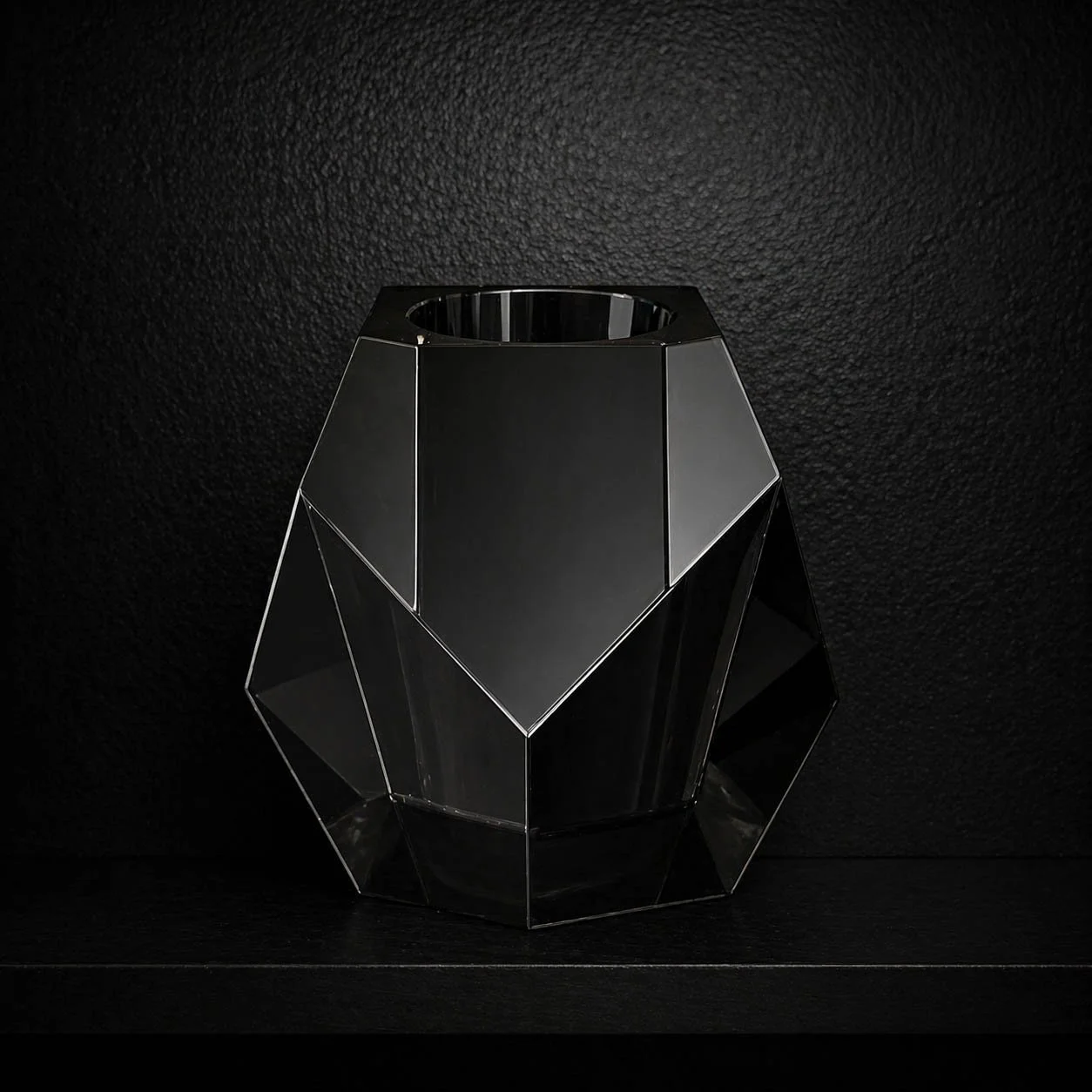
None of this requires a verified 1980s date. The goal is the aesthetic, not a museum collection. A piece doesn't have to have been made in 1985 to belong in this room. If the material, geometry, scale, and finish speak the same language, an earlier or later object can work better than a mediocre piece with a correct label attached to it.
The room that started with one ordinary shower caddy is still being built, one hard-to-find piece at a time.
See the full range of pieces that define this register in The Black Lacquer collection
Know where to hunt before the weekend.
A small edit of the estate sales, auctions, and shows worth knowing about. Free every Thursday.
