The Brass Peacock Fireplace Screen: What to Look for Before You Buy
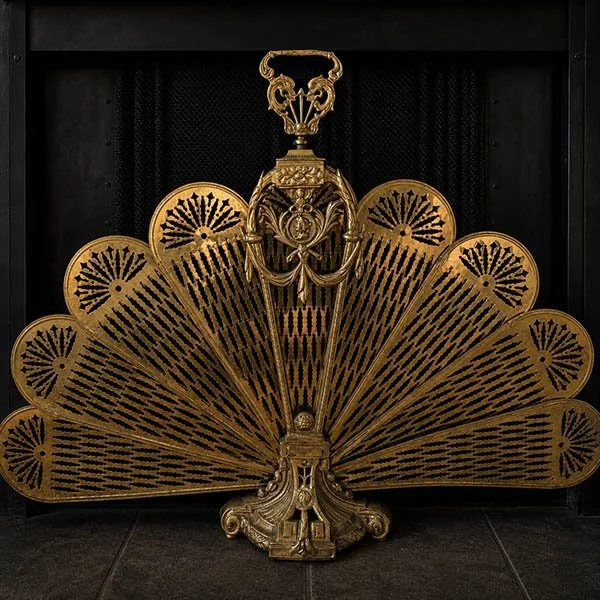
It was standing in the middle of an aisle, taped shut, next to a cart of things waiting to be shelved. I almost walked past it. Thrift stores are full of objects people walk past, and most of them deserve it.
This one didn't. It was a brass peacock fireplace screen, closed and taped. I had always liked them without ever planning to own one, and that changed right there in the aisle. The brass had that dulled, uneven color I associate with real age, rather than the flat sameness of something new. It was the last thing I expected to find in that store.
I was sure something would be wrong with it. A missing panel, a bent hinge, a section that wouldn't sit flush. I peeled the tape back and opened it right there in the aisle. It moved smoothly, every fan section swinging into place the way it must have when it was made. Nothing was missing. Nothing was deformed. It just needed a light cleaning to bring the brass back.
I have never left a store faster.
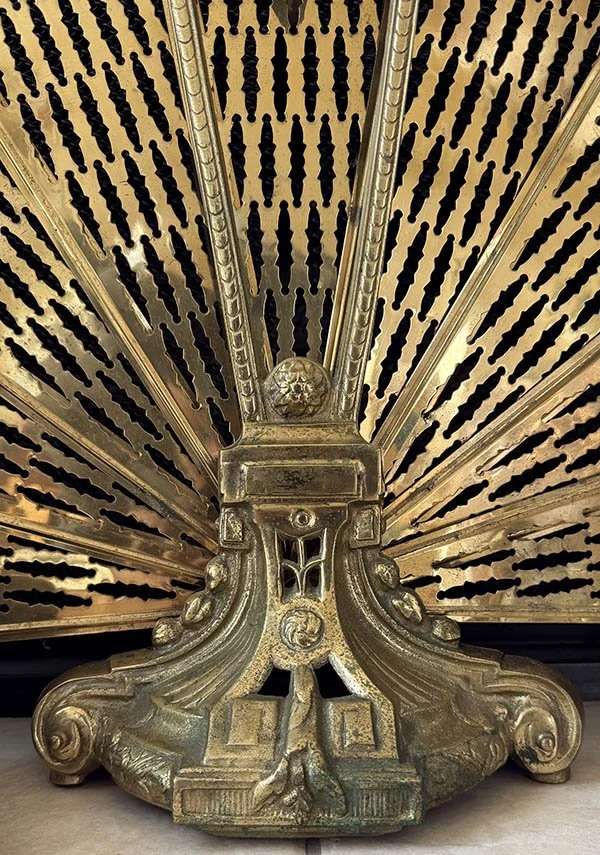
Once the brass peacock fireplace screen was home, the detail kept opening up the longer I looked. The medallion at the base. The acanthus scrollwork curling around the feet. The way the fan sections converge at a single ornamented point instead of simply spreading out flat. Here is something I didn't understand until I turned mine over and looked closely: the base and the hinges deserve as much scrutiny as the decorative face. A screen can look stunning head-on and still have a wobbly foot or a stiff, worn hinge that keeps it from holding its angle. Check the moving parts the same way you'd check the ornament.
A folding fan screen like this one is deceptive in photographs, because so much of what makes it work only shows up once you handle it. A few things worth knowing before you go looking for one of your own.
Start with the fireplace, not the screen. Measure your firebox opening directly, and then find out the screen's fully open dimensions, not just its folded footprint. A fan screen can look modest closed and take up considerably more width once extended, so a listing's overall measurements can be misleading if they don't specify open versus closed.
If you want something similar but smaller, a genuinely 1930s French brass peacock's tail fire screen opens to about 29 inches wide, a good option if your firebox runs narrower than a full-scale piece needs.
Open every section yourself before you commit to it. A screen like mine isn't just decorated metal, it's a mechanism. Multiple moving sections have to open, align, and remain stable once the screen is fully extended. Photographs can't tell you any of that. Operate it the way you'd test a piece of furniture with moving parts, because that's genuinely what it is.
Inspect the base and the joints as carefully as the face. Feet, hinges, and the central pivot point take the most stress over decades and are where problems show up first, loose joints, a foot that's been reattached, a hinge that's lost its spring. These details are also easy for a listing photo to hide.
Let patina be part of the appeal, but tell it apart from damage. Oxidation and an uneven, worn finish are what make a piece like this feel genuinely old rather than staged to look old. A broken weld, a wobbly foot, or a hinge that won't hold its position are a different problem, and worth walking away from even if the surface looks beautiful.
Judge the silhouette before you judge the detail. When you're shopping online, it helps to mentally reduce the screen to its outline. Fan, arch, rectangle, folding panels. That outline is often what actually shapes how a room reads, more than the ornament layered on top of it.
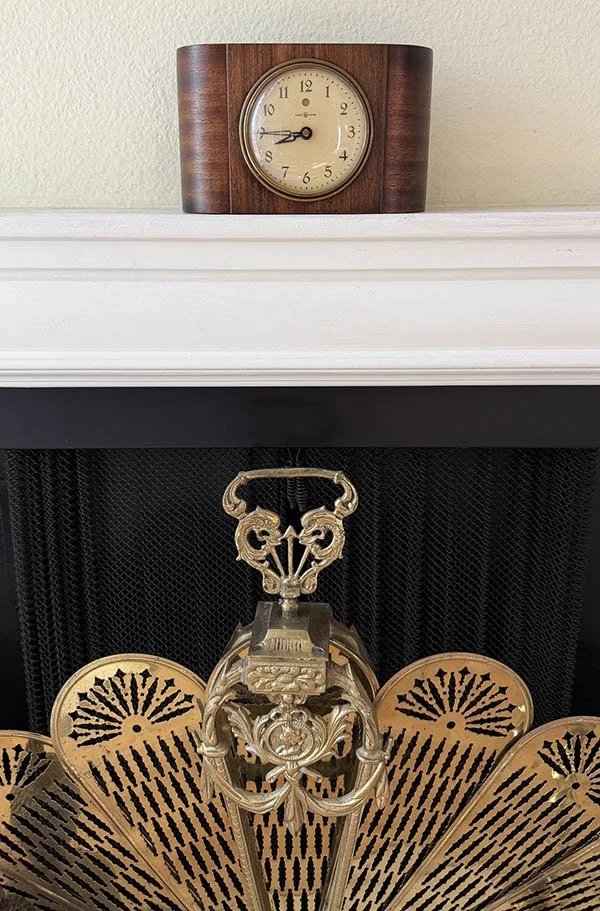
Don't assume the screen has to match the fireplace. Mine is elaborate, aged brass against a plain white mantel and black firebox, and the contrast gives both more definition. Matching the period, finish, or level of ornament can work, but it isn't a requirement. What matters more is whether the proportions and visual weight make sense together.
Know what you're actually buying protection-wise. A pierced or perforated brass screen like this one isn't automatically the same thing as a fine mesh spark barrier, even when mesh is built in behind the metalwork. If you're placing a screen like this in front of an active fireplace, check what your fireplace actually requires, since some gas units in particular have their own required barriers or ventilation clearances that a decorative screen shouldn't interfere with or be mistaken for.
Mine sits open now, full width, in front of a black firebox and a plain white mantel, more sculpture than equipment most days. That contrast is doing more work than a matching finish ever would.
If you're looking for a companion clock in the same spirit, this 1925 Austrian mantel clock, attributed to Kienzle, has the same nutwood warmth as mine and genuinely dates to the period.
Related reading: Art Deco Clock Garniture Styling: What Belongs Beside the Clock You Already Have.
See the full collection at The Mantle.
Know where to hunt before the weekend.
A small edit of the estate sales, auctions, and shows worth knowing about. Free every Thursday.
