The Face I Found on a Charleston Ceiling
No one else was touring the house that afternoon. Just an audio guide, the sound of my own footsteps on wood floors gone dark with age, and heat with nowhere to go. There's no air conditioning in most of the Aiken-Rhett House. The room built to hold the family's art collection has it. The rooms the Aiken family lived in don't, and neither do the kitchen and quarters out back where the enslaved people who ran the household worked and slept. So the heat that afternoon was close to whatever heat everyone in that house lived with on an ordinary Tuesday in 1858, and knowing that while I stood there alone made the whole place feel less like a museum and more like I'd walked in on something.
I knew before I went that the house is preserved as found, not restored. I'd read that line in the description. It's a different thing to stand inside it. Alone, in that heat, in a room where the paint had been left exactly where it flaked and the plaster exactly where it cracked, it was beautiful and unsettling, both, at once.
In the front parlor, a bronze chandelier hung from the ceiling on chains, and set into the metal at the base of each arm were faces.
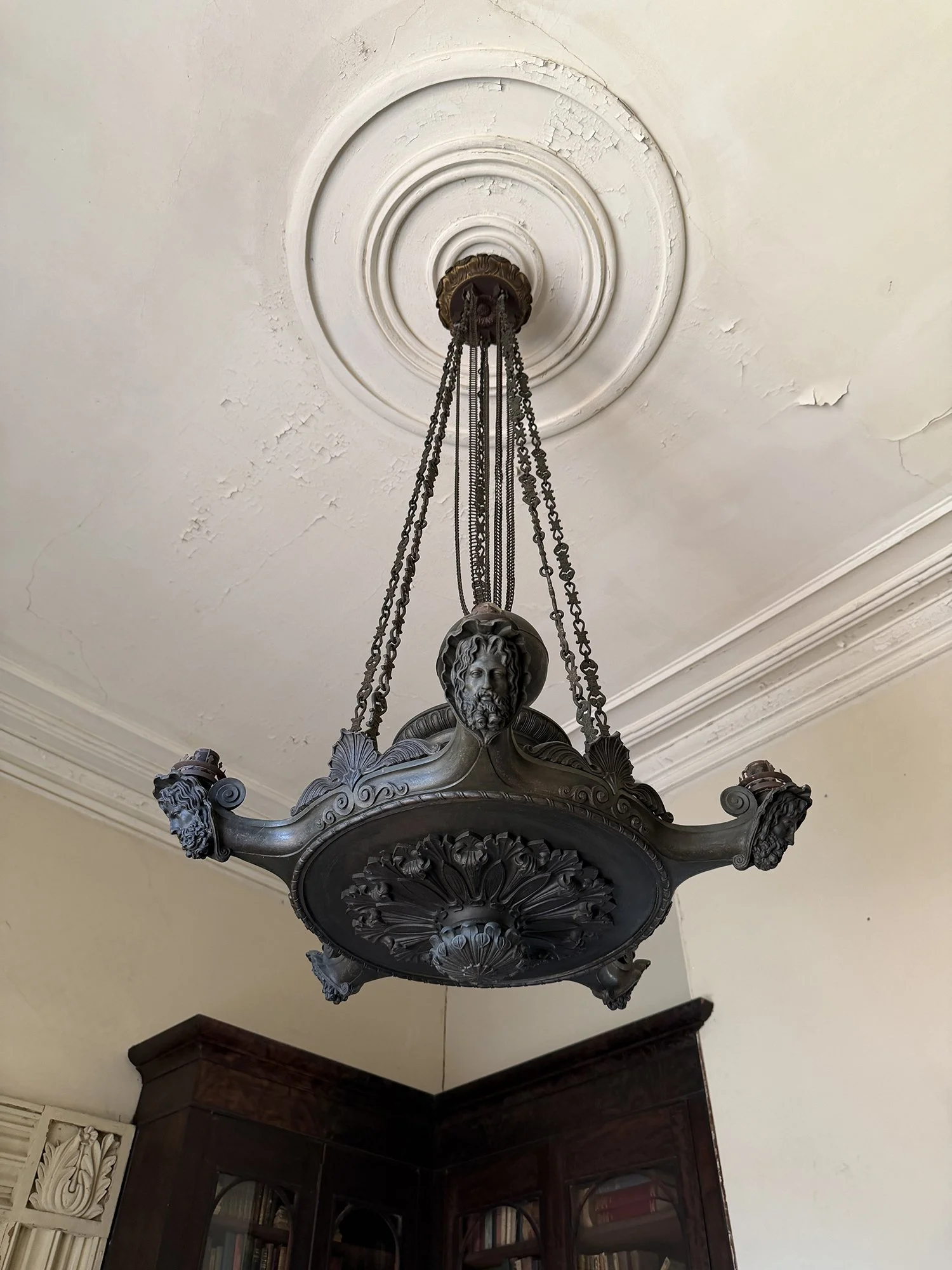
Bearded, heavy-lidded, cast in the same dark bronze as everything around them. Every other chandelier in that house was crystal, catching light, throwing it back in pieces, doing what a chandelier is built to do. This one didn't.
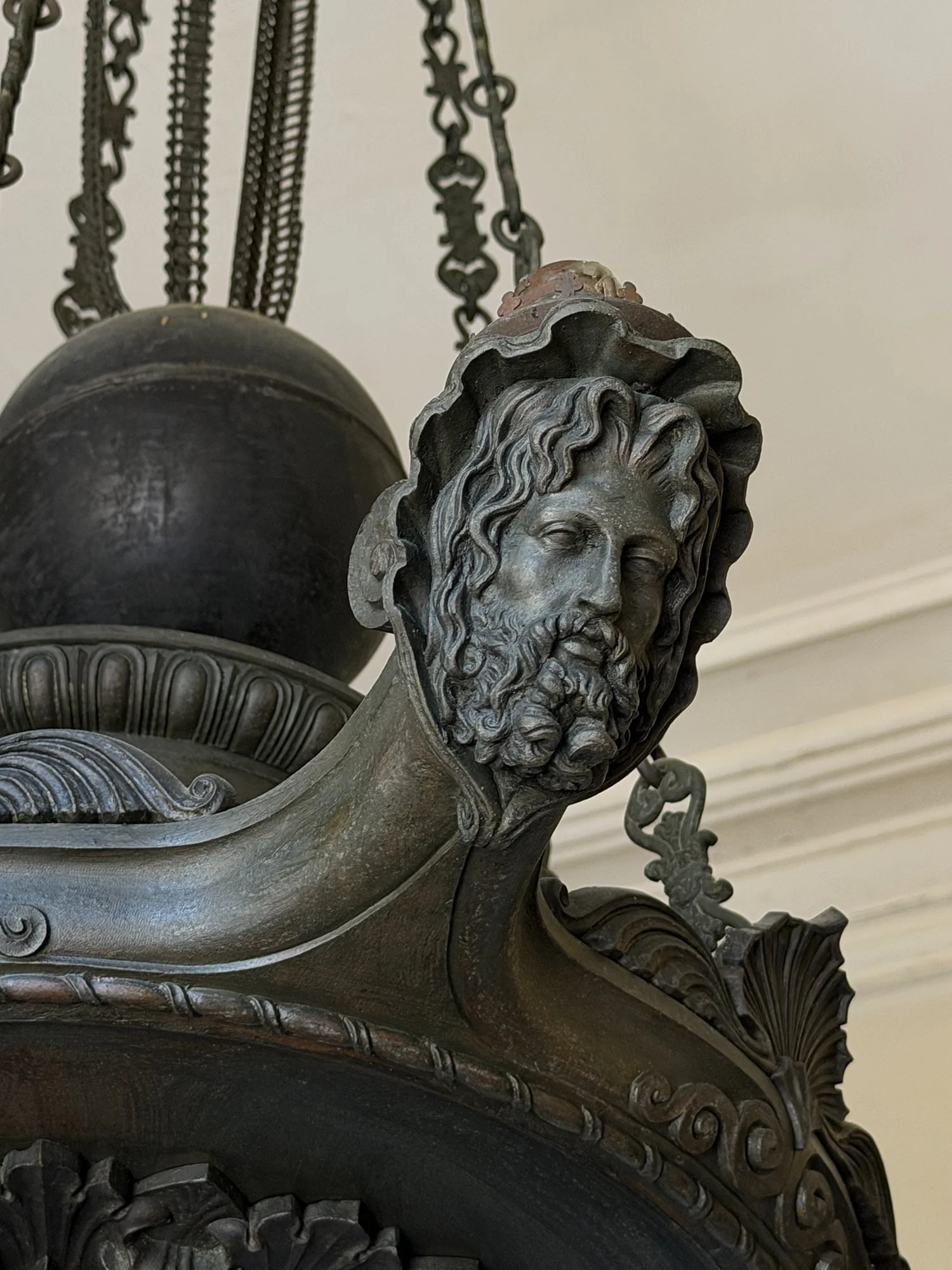
It absorbed the light instead of playing with it, all that dark bronze sitting heavy under a plaster medallion carved deep enough to throw its own shadows. The house was full of evidence of taste, in a dozen other rooms and objects. This chandelier is the one I keep coming back to because it was the single object in the whole visit that looked nothing like what I expected a chandelier to look like.
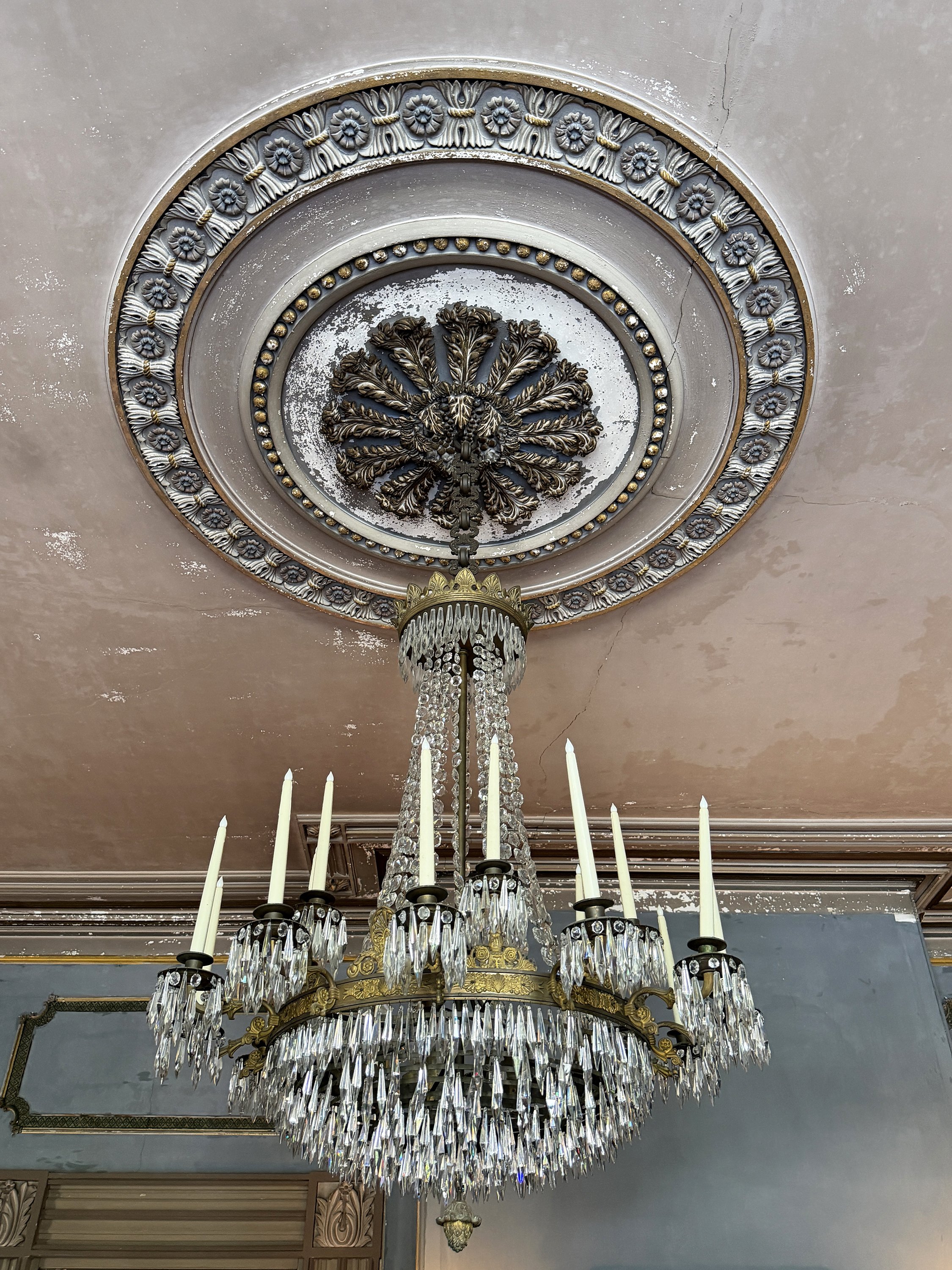
I assumed "preserved as found" meant frozen at 1858. It doesn't. Nobody can say for certain when that crack in the plaster opened up or when the tarnish set into the bronze. Some of it might date back to the family. Some might be newer. Historic Charleston Foundation actually tracks it: preservation staff have been mapping the plaster cracks throughout the house since 2009. As-found doesn't mean nobody's paying attention. It means nothing gets repainted or resurfaced just to look finished for a visitor.
Further into the house I found a rococo mirror in gilt wood, with carved leaves and shells rising above the glass. The carving was deep, and several pieces had chipped off over the years. Behind it was bare, discolored plaster with a long crack running above the frame. The glass was spotted and cloudy enough that my reflection looked blurred in places.
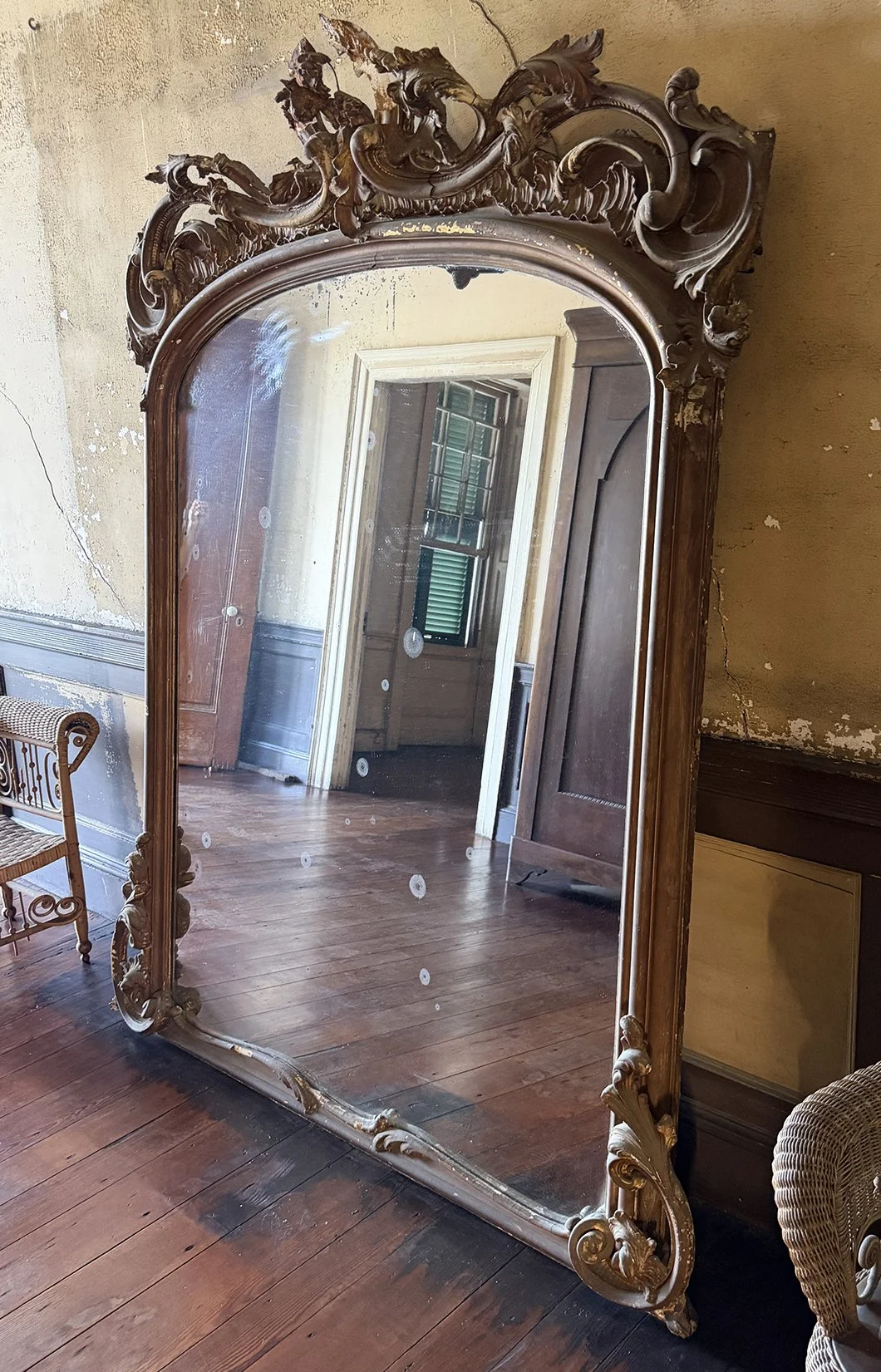
I started thinking about where a mirror like this one would actually go in my own place. Between two chairs with real wear already in the wood and the upholstery. Plenty of bare wall around it. I realized I wasn't picturing it cleaned up first. I was picturing it exactly like this.
Restoration usually means picking one period in a house's life and rebuilding toward it, cleaning up whatever came after so that one moment reads clearly. This house didn't get picked apart that way. The cracks stay up, studied but not patched over. The tarnish stays on the bronze.
More along these lines lives in The Antiquarian Bedroom.
