Antique Bedroom Decor: How to Build a Dressing Spot Without a Vanity
There's a stretch of wall in my bedroom, between the door and the path into the bathroom, that sat unresolved for a while. It wasn't large enough for a vanity, but it felt too prominent to leave empty. I knew what I didn't want there. I wasn't sure yet what I did.
The answer arrived at a thrift store in Palm Springs, in the window of time between a wedding ceremony and the reception. A set of nesting tables, oak and walnut, turned legs, a top with real wear across it. I bought them on the spot. Some pieces you recognize before you've fully thought it through.
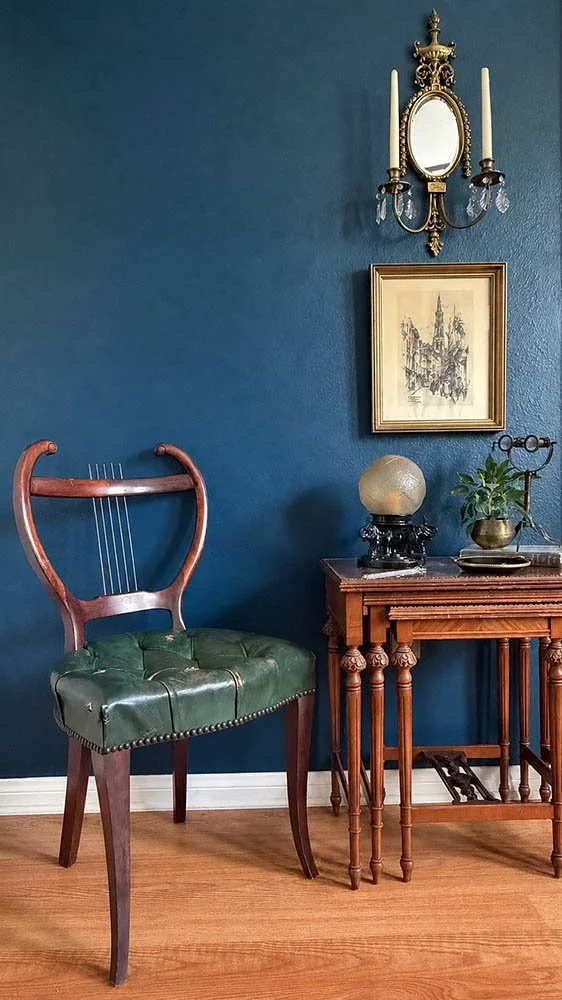
That table gave the spot its purpose. I used to leave my watch and wallet on the nightstand. Within a week I'd forgotten they were there, buried under a book or a charging cable, and I'd be searching the room ten minutes before I needed to leave. Moving that daily reset to a table near the door solved the problem in a way the nightstand never could. It's the last thing I pass on the way out and the first thing I see coming back in, which means the objects that live there actually get used instead of forgotten. A small habit like that gives a room a kind of rhythm decoration alone never does.
A brass planter holds a small plant. A glass globe lamp rises from a black elephant base. A shallow black dish with a rope-edged rim holds a ring and a handful of old coins. By evening, the lamp catches the brass and the worn leather of the chair beside it, while the darker objects quietly recede into the wall behind them.
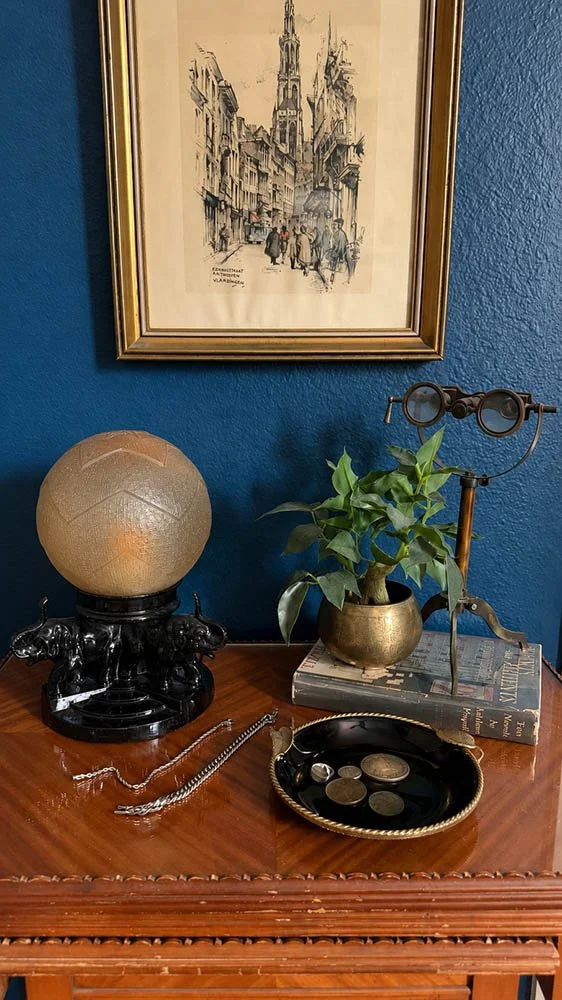
The nesting tables work in this spot for a reason that has nothing to do with style: they sit close to the wall. I tried another table here first, one with a bolder shape that caught the eye the moment you walked in, and it didn't work. It sat far enough out that I had to angle around it every time I passed, which turned a functional spot into an obstacle. The nesting tables solve the same problem without asking anything of the walk space. That's the real test for furniture in a tight bedroom seating area: not whether it looks right standing still, but whether it disappears once you're moving through the room.
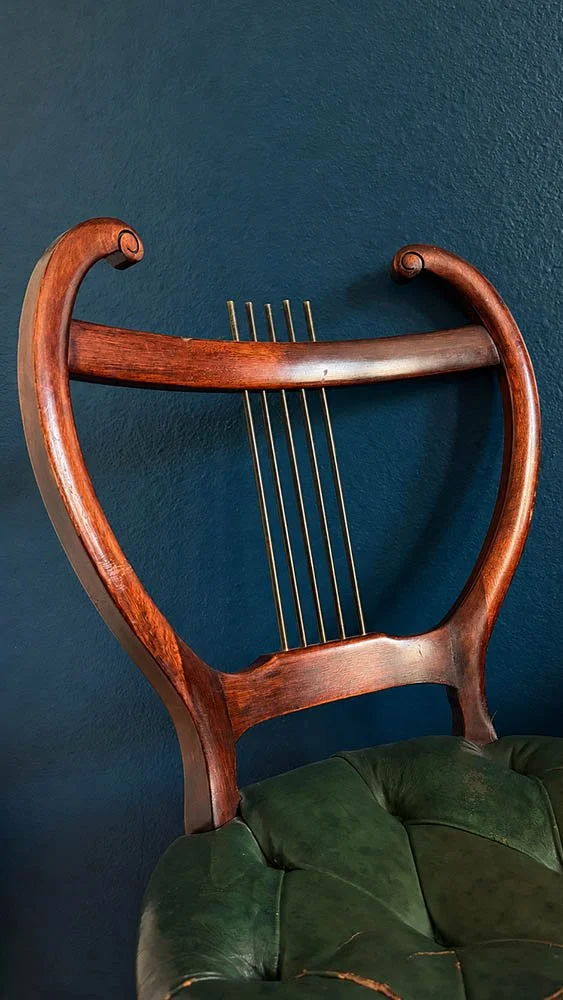
The chair is what turned this spot into somewhere worth pausing. A mahogany lyre-back chair in the Regency style sits beside the table now. The motif takes its name from the ancient Greek lyre and became popular as Regency designers looked back to classical forms for inspiration. Its green leather seat has softened, with worn corners shaped by years of use. I brought the chair in for this piece, expecting it to do decorative work and little else. It's already become something I reach for, mostly to sit and put on shoes before heading out. Not every piece of antique bedroom furniture needs a function to justify its place, but it's worth staying cautious about adding pieces purely for the sake of it.
The same caution applies to the table itself. A catchall surface earns its keep by staying a catchall, not a collection point. Left unchecked, the very thing that makes it useful, always having a spot for the small stuff, can just as easily turn into a pile you stop noticing. It's worth clearing it back to a few objects now and then rather than letting it quietly fill up.
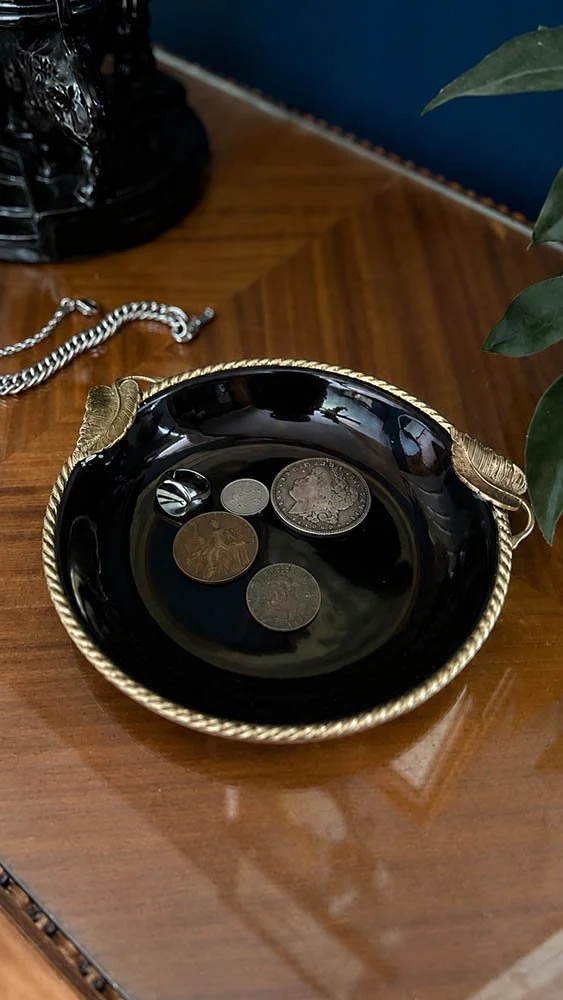
The wall's dark color is doing more here than people tend to give it credit for. Against navy, brass turns warmer, dark wood reads richer, and black objects recede instead of competing for attention, so the whole grouping reads as one composition rather than a handful of separate pieces.
This wall also sits close enough to my gallery wall that I've had to be deliberate about restraint. The gallery is where I want a visitor's eye to land first. This table is a supporting note, not a rival one, and keeping it that way has taken more discipline than adding to it ever would have.
A dressing spot doesn't require a vanity or a dedicated dressing room. Sometimes all it takes is a chair worth sitting in, a nearby surface that keeps everyday objects within reach, and enough restraint to let those few pieces do their work.
For more on building a bedroom that layers this way, visit the Antiquarian Bedroom collection, or explore how restraint shaped a home library styled for dark academia.
Know where to hunt before the weekend.
A small edit of the estate sales, auctions, and shows worth knowing about. Free every Thursday.
