The Antique Globe That Was More Than a Prop
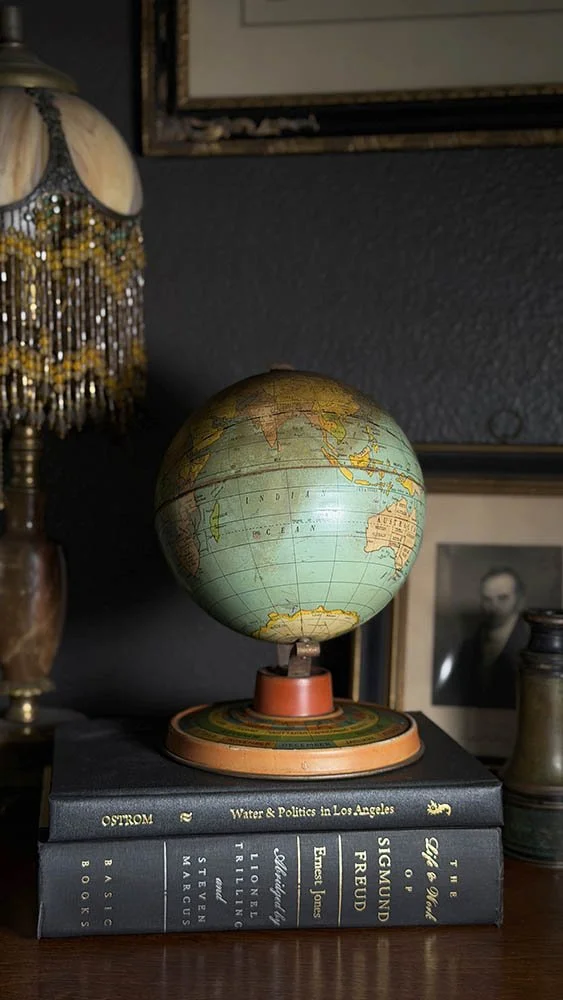
I was specifically hunting for a globe that day, working my way through one more booth at the antique mall with nothing to show for it. Then there it was, tucked in among things twice its size, a small tin globe barely bigger than a grapefruit. I'd expected to want something with a bit more presence. Instead, small as it was, it felt whole the moment I picked it up, and that settled it.
The metal was thin in that particular way old toys are thin, but substantial. The colors were flat and muted, more like sun-faded fabric than anything printed today. It felt like a child's toy. It didn't feel new.
The tag read globe, 1930s, and that's when curiosity turned into something closer to an itch I had to scratch. Near Antarctica, I found a maker's mark: Ohio Art, out of Bryan, Ohio, a name I recognized from tin toys, not maps.
A World That Doesn't Exist Anymore
Turn a globe like this one slowly enough and it stops reading like decor and starts reading like a document. Siam sits where Thailand is today. Manchuria holds ground now folded into China. Abyssinia occupies the space Ethiopia does now. French Indo-China and the Dutch East Indies mark borders that dissolved before most of us were born.
Antarctica is the strangest part of all. Whole stretches of the continent were still insufficiently explored and mapped when this globe was made, and the surface simply says so.
A friend of mine actually went to Antarctica a few years back. The first time I noticed how much of the continent was left blank on the globe, I found myself wondering if she'd stood somewhere inside one of those gaps. Once that landed, the globe stopped being something I'd grab for a photo and became something else.
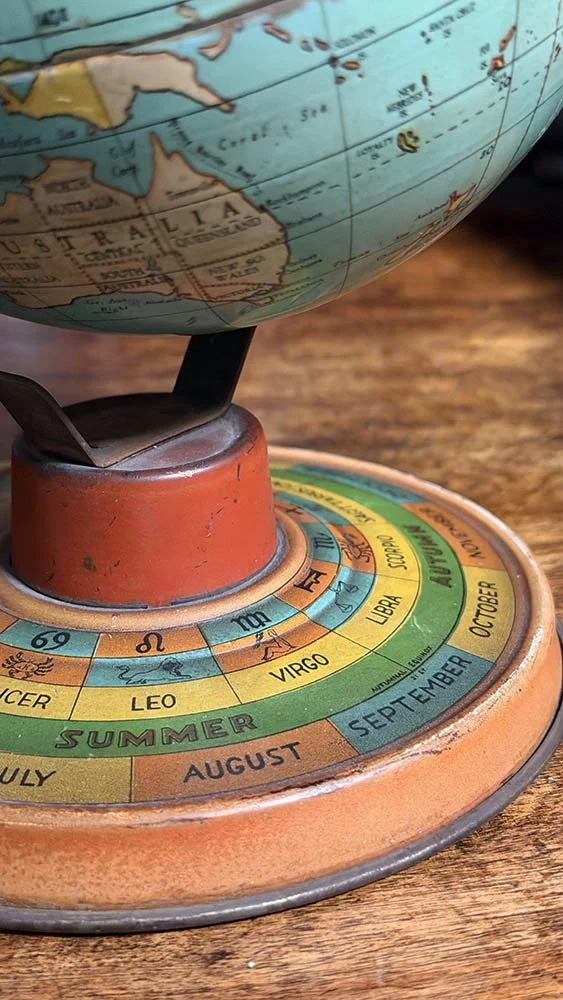
The base is worth a second look. A ring of zodiac signs circles the meridian mount, months and seasons lithographed in muted red, green, and gold. More ornament than instrument, but it gives the whole piece a presence a plain stand wouldn't have.
Styling an Antique Globe Without Making the Room Themed
A piece this specific needs a room that already carries some age around it. Add too much matching decor and it starts to look staged.
A globe this size, closer to a grapefruit than a schoolroom model, is easy to work into a shelf. A large antique floor globe needs the room to organize around it. This one just needs a spot among the books.
It doesn't need elevating either. The stand already gives it height, so stacking it on top of books just competes with what the base is doing. I let lower objects, a run of spines, a low dish, sit beside it instead.
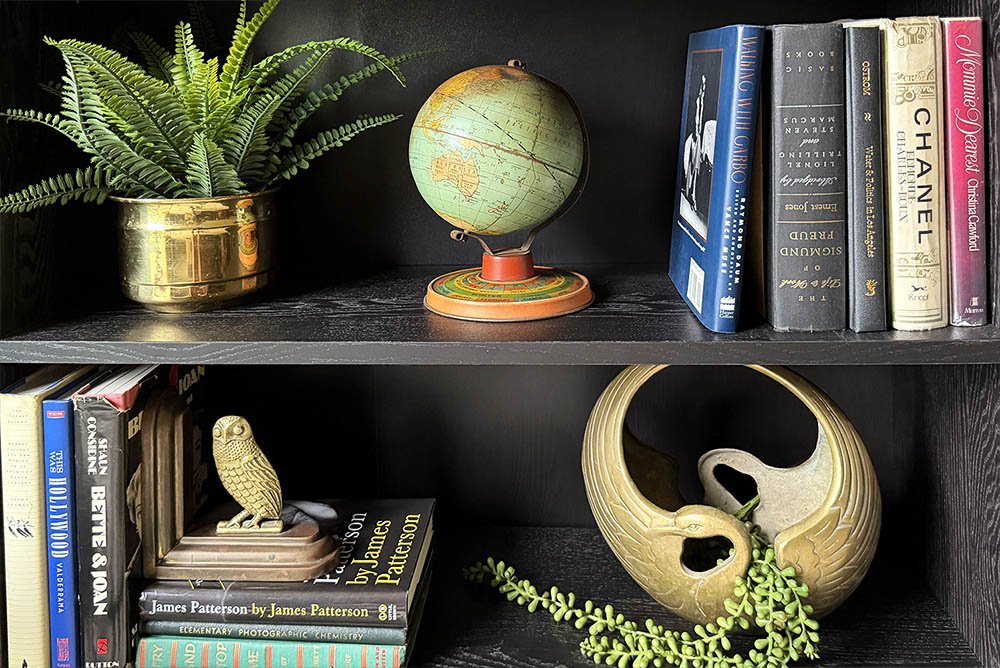
If you're looking for one yourself, start with what you actually want it to do in the room. For this shelf, I wanted flat, softened color. A bright blue or glossy globe would pull too much attention.
Then look closer. Check how the globe, stand, and meridian are put together. Don't mistake lightness for newness. Early tin globes like this one can be surprisingly light. Typography and printing can offer clues too, but the map itself tells you more. Old country names and shifted borders help narrow down when the cartography was drawn, far more than a seller's description ever will.
Resist the urge to make an old globe look new. Aggressive polishing can strip the character from old hardware, and faded lithography isn't something I'd try to brighten. A softened finish, muted color, a small dent: that's the kind of wear worth keeping. A loose seam, active rust, or a mount that no longer holds the globe steady needs a closer look before it comes home.
Skip the matched trio of explorer props too. A compass, a mineral specimen, and a magnifying glass lined up together starts to look like a museum gift shop rather than a room someone actually lives in. One well-chosen object does more than three competing for attention. Worn brass binoculars, a stack of books with real spine wear, or a single brass vessel with some age to it are enough.
Lighting matters for a piece this small. Against a dark backdrop with one warm light source, the muted greens and golds keep their color, and a detail like the zodiac base actually gets seen instead of disappearing at the edge of the frame.
I bought this globe to use as a prop for a photo shoot, something to fill a shelf, nothing more. That plan didn't survive learning what it actually was. It looked good on a shelf before I knew any of that. It means something on a shelf now.
For more on building a room around finds like this one, explore The Dark Study collection, and see how a similar bookshelf came together in Home Library Styling for Dark Academia.
