What I Learned Hunting Frames for a Gallery Wall
I'd spent the afternoon working dealer booths with a camera, as I usually do when I'm sourcing. It helps me remember what I found without carrying everything or deciding on the spot.
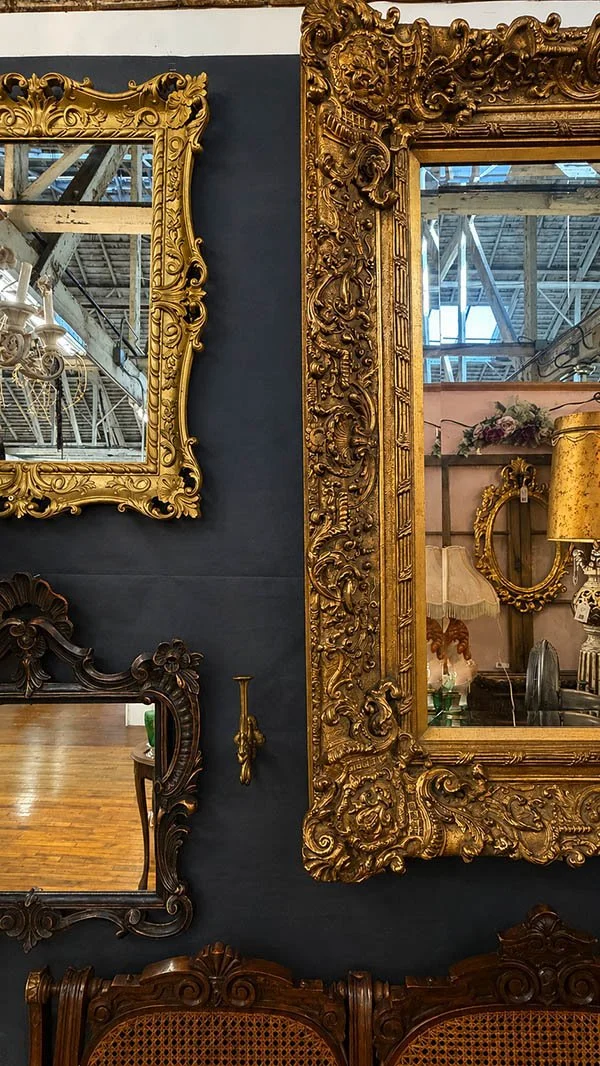
Two gilt mirrors stopped me, hanging almost edge to edge. The frame on the right was deeper and heavier, thick with scrollwork, and next to it, a frame that would look substantial anywhere else suddenly read as quiet by comparison. Neither one was subtle. I couldn't tell you either one's actual age, but the wear looked consistent rather than staged, and that was enough for me. What actually stopped me wasn't the scale. It was thinking about how many hours of work that carving represented, and how rare that's become.
That's the thing I kept circling back to as I kept looking, hunting for antique frames for a gallery wall and coming home with a camera full of them. A mass-produced frame today can be four simple pieces of wood or molded plastic, made anywhere, made anytime in the last few decades, telling you nothing about who made it or when. An old frame like the one on the right isn't like that. Carving, molding, gilding, joining, finishing, all of it required real decisions and real skill somewhere along the way. I spent some time with woodworking last year, just enough to understand how sensitive that process actually is, how much a single tool angle or a beat too long with a chisel changes everything. It made me pay attention to frames I might have walked past before. You can see the decisions of the person who made it, even if you'll never know their name.
Most of the afternoon was less about single frames and more about volume. Bins of stacked frames, a wicker basket of smaller ones with corners chipped and gilding worn thin, none of it curated, all of it worth going through by hand.
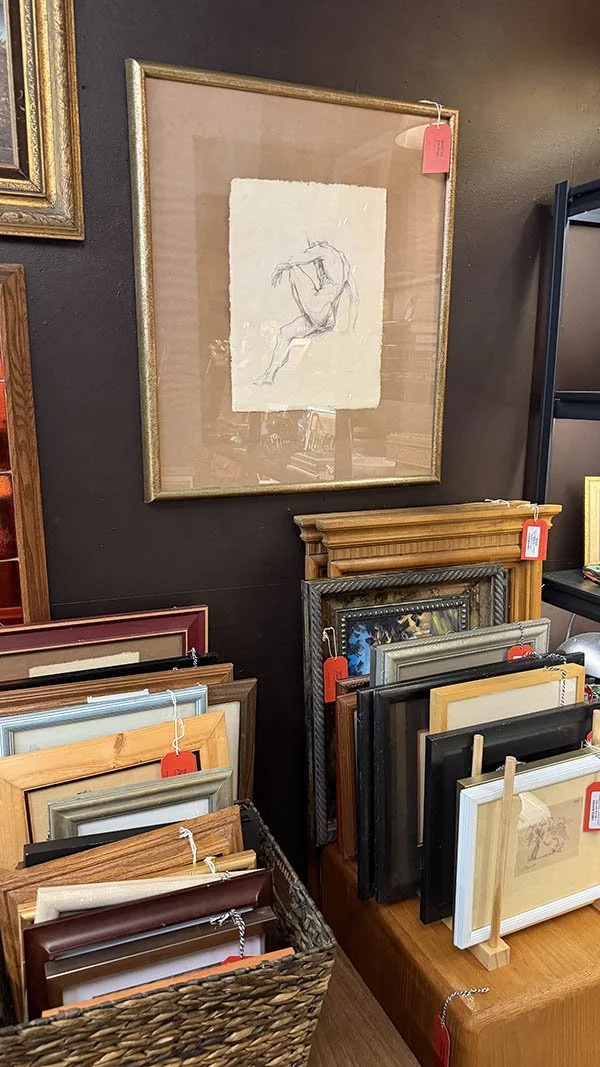
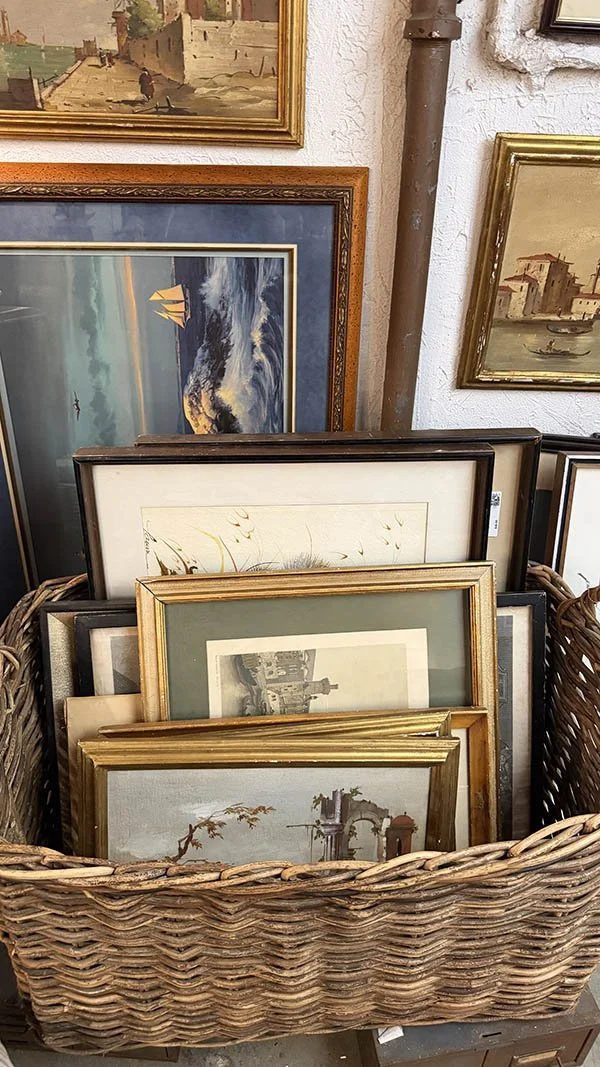
The useful part of hunting this way is that you stop judging each frame as a standalone object. Scale matters. So does profile, finish, and how much visual weight a frame carries before anything is even put inside it.
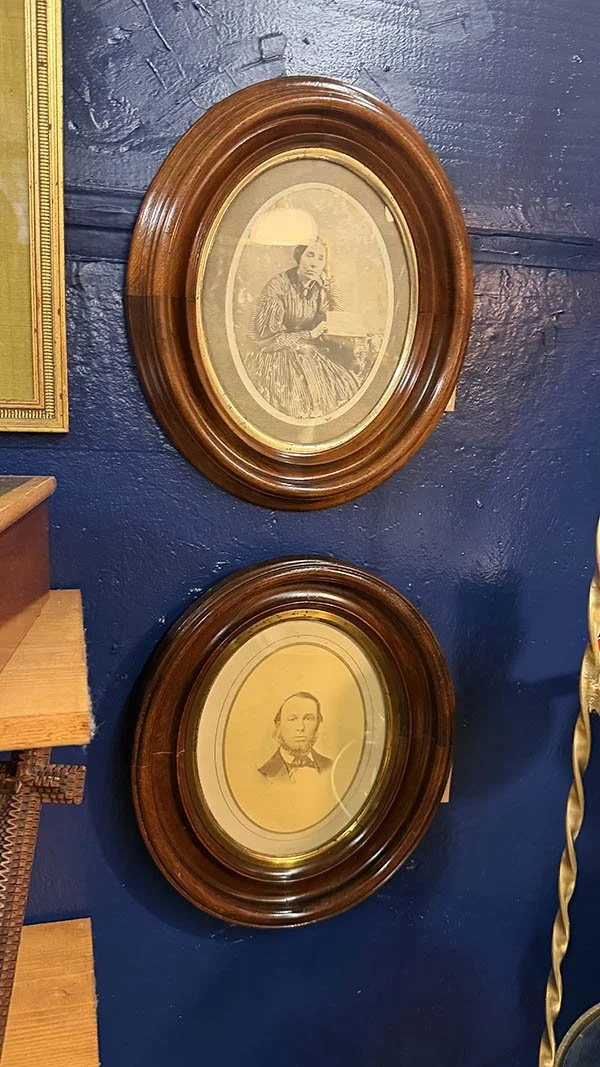
Ovals kept turning up more than I expected, mahogany ones, gilt ones, alongside a diamond-shaped mirror that wasn't oval at all but broke the expected rectangle just as completely. A pair of dark wood ovals had been styled with old portrait photographs, a woman and a man, and the restrained wood suited those faces better than anything gilt would have, whether or not they'd ever actually belonged to that pair of frames. I'm drawn to shapes that interrupt a wall of rectangles, but I don't think they work because they're unusual. They work because they change the rhythm around them.
Up close, that same heavy scrollwork often repeats itself, the same acanthus leaf or shell motif showing up again and again down the molding. It's tempting to read that repetition as a sign something isn't real. It isn't. Composition ornament, molded separately and applied to a wooden frame, has been used on genuinely old pieces since the late 1700s. Identical decoration alone doesn't confirm anything either way. What tells you more is whether the wear makes sense across the whole piece. Convincing wear only on the front, paired with construction that looks unusually clean everywhere else, is worth a second look before you carry it home.
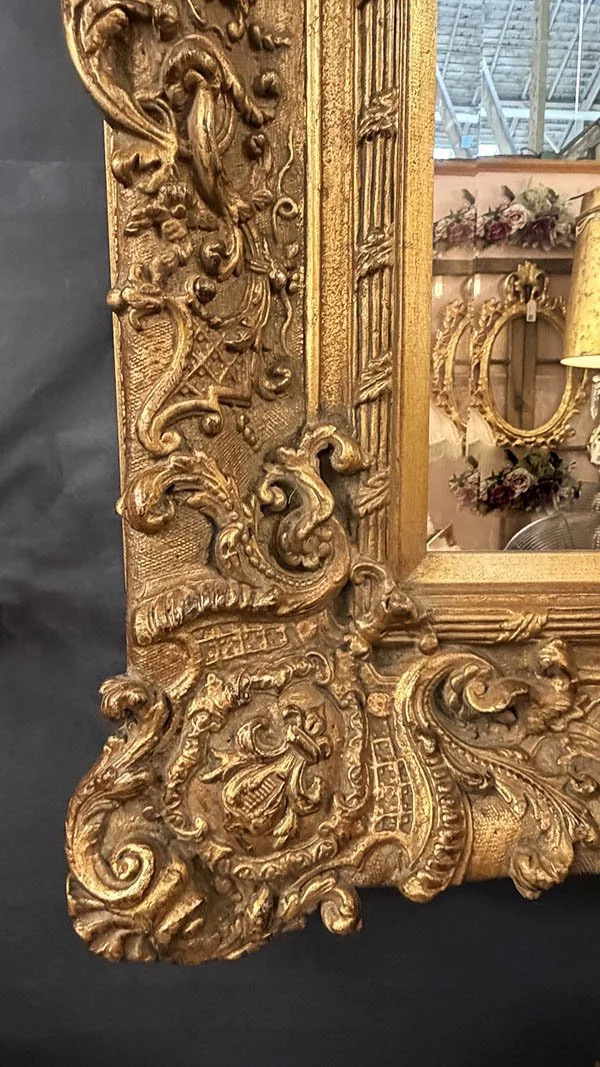
The same distinction matters with condition. A chip that reveals old wood underneath, or hardware that looks original to the piece, can support other signs of age, even if neither proves anything on its own. Worn gilding and small losses along an edge are the kind of wear I'm happy to live with. Loose joints, ornament actively shedding off the frame, or whole sections of decoration missing are different. That's a condition problem, not character, and no amount of styling fixes it.
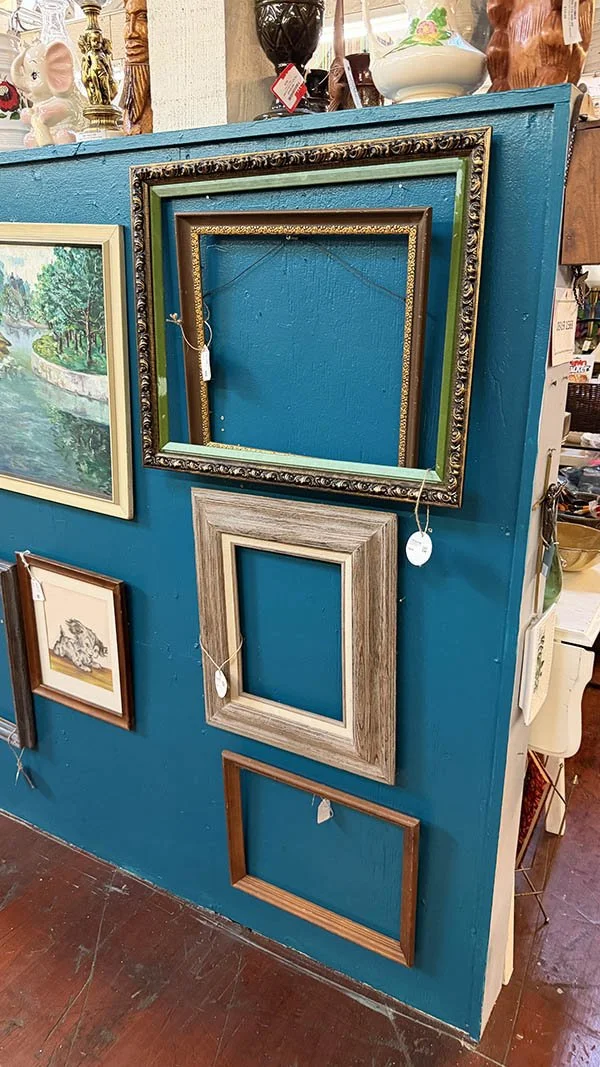
Somewhere in the same booth, a dealer had an empty frame hung right alongside the framed pieces, priced and displayed the same as everything else for sale. Empty frames sell fine on their own, and mixed in with the rest of the wall, this one looked like part of the arrangement rather than something waiting to be finished.
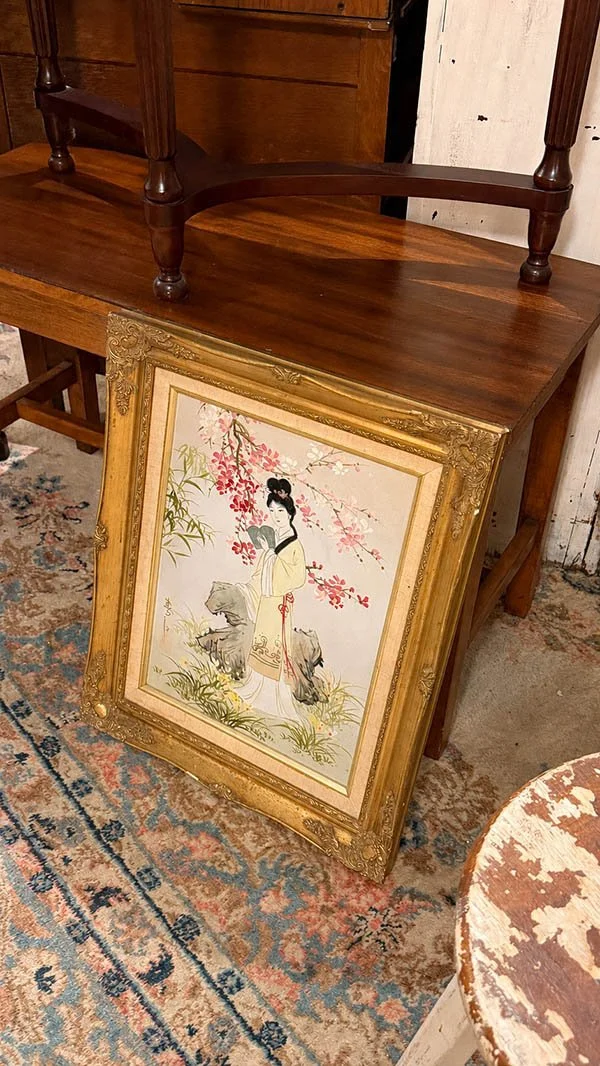
I also passed a frame that afternoon holding an image that didn't belong in it: wrong tone, wrong era, from a different culture entirely. A cheap modern print jammed into an old gilt frame can create the same problem. Instead of making the print look more important, the mismatch makes the whole thing feel less convincing.
I can see all of this on my own vintage frame gallery wall now. The widest, most ornate gilt frame sits beside one of the plainest dark wood ones, giving each more presence than it would have beside something similar. A small oval interrupts the rectangles. A devotional plaque hangs directly on the navy paint at a height that makes it part of the arrangement rather than an afterthought.
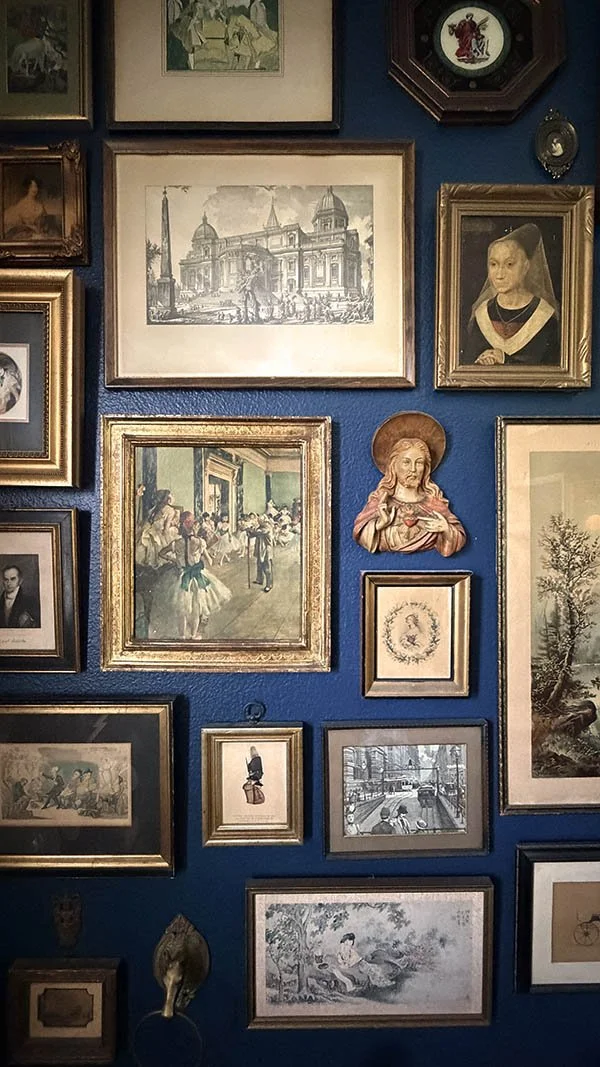
I look for different things when I'm sourcing than I do when I'm arranging. What catches me in the booth is craftsmanship, the material, the ornament, the wear that tells you something actually happened to this object over time. What matters once frames are on the wall together is scale and contrast, how one piece changes the one beside it. A gallery wall can hold different periods, finishes, shapes, and levels of ornament, but not everything can shout at the same volume.
The best frame in the booth isn't necessarily the most elaborate. Sometimes it's the one that gives everything around it more contrast.
Explore The Antiquarian Bedroom for more on how frames like these live inside a fuller room. For the mechanics of spacing and layout, start with Gallery Walls: How to Build One That Looks Collected.
Know where to hunt before the weekend.
A small edit of the estate sales, auctions, and shows worth knowing about. Free every Thursday.
