A Room That No Longer Exists
I was a child, small enough that the table sat at eye level. On the floor of my grandparents' living room, I would press the brass flowers at its base down with my finger and let them spring back, that same small mechanical give each time, the only sound in the room. I had no idea what the table was worth, or what era it belonged to, or that it would one day sit in my own home three thousand miles away. I only knew the flowers, and the particular quiet of that room, and the painting hanging just high enough above me that I was too young yet to really see.
They held on to things. Not carelessly, they were organized people, but they kept what mattered to them, and over the decades that turned into an attic that could have rivaled any antique mall I have walked through since. Toys from the 1950s, appliances, my grandfather's records from the 1940s, furniture from the 1960s they never replaced because why would you replace something that still worked and still looked exactly right. A room like that does not fill itself. It happens slowly, over a lifetime of deciding a thing is worth keeping.
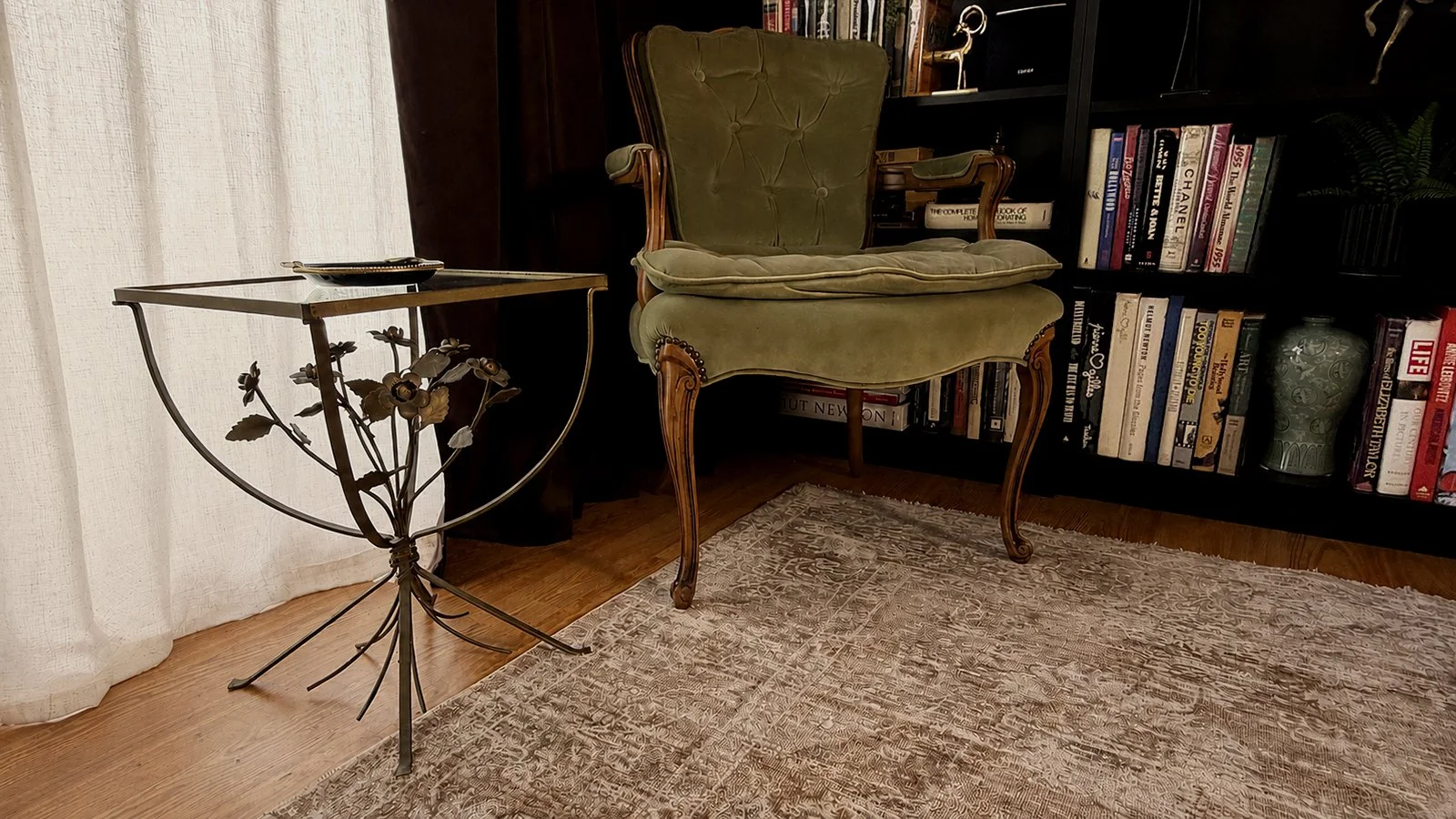
For years I assumed it was the table and the painting that had stayed with me, the things that seemed important. Memory, it turns out, has a less predictable eye.
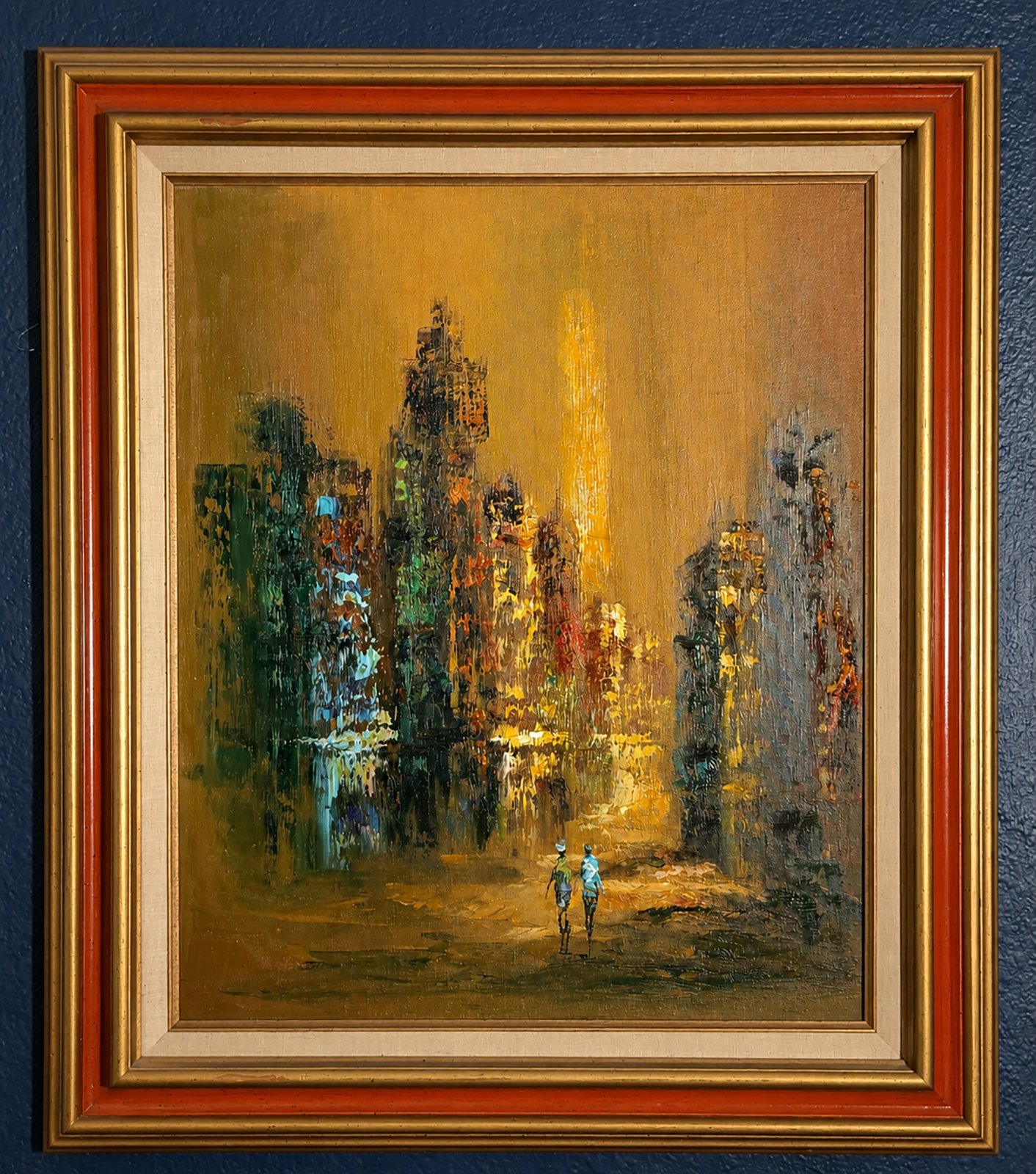
The painting hung above the table, an oil piece worked entirely in palette knife, thick ridges of paint built up into a skyline of teal, ochre, rust, and near black, the whole sky behind it a wash of amber gliding toward gold at its center, as if light or heat were rising straight up between the buildings. Two figures stood at the bottom, thin and elongated, painted with a much lighter hand than the buildings around them, one in olive and lavender, one in blue, walking away from the viewer down a lit street, small against everything towering over them. I did not know as a child whether it was an original, though it was clear enough once I was old enough to look closely, and it did not occur to me to ask. What I knew was that it felt elegant to have an oil painting in the house at all, and as I got older I would sit in front of it and invent stories about the two figures, who they were, where they were walking, what waited for them at the end of the street. The mood of it was comforting and unsettled at once, the dark buildings pressing in against all that warm gold light.
Not everything I remember from that house was impressive. A small clown figurine on the dresser in the room I slept in, one I mostly ignored at the time. An ornate dining chair I threw my jacket over without a second thought. An Edward Mobley dog that belonged to my mother when she was a girl, kept in the den for reasons no one ever needed to state, one I would sometimes pick up and play with, meaning nothing by it. None of these were the objects I would have named if you had asked me, at ten, what I loved about that house. They were just there, the way furniture and small toys are simply there in a house that has been lived in a long time.
I spent every summer in that house, which I think is where my appreciation for the past actually started, long before I had a name for it. Now, in a thrift store, it is the small, unassuming things that catch me hardest, a figurine like the one on that dresser, a dog like the one from the den, a chair like the one I threw my jacket over without a second thought. The feeling that comes with it is never sad. It is closer to being handed something back.
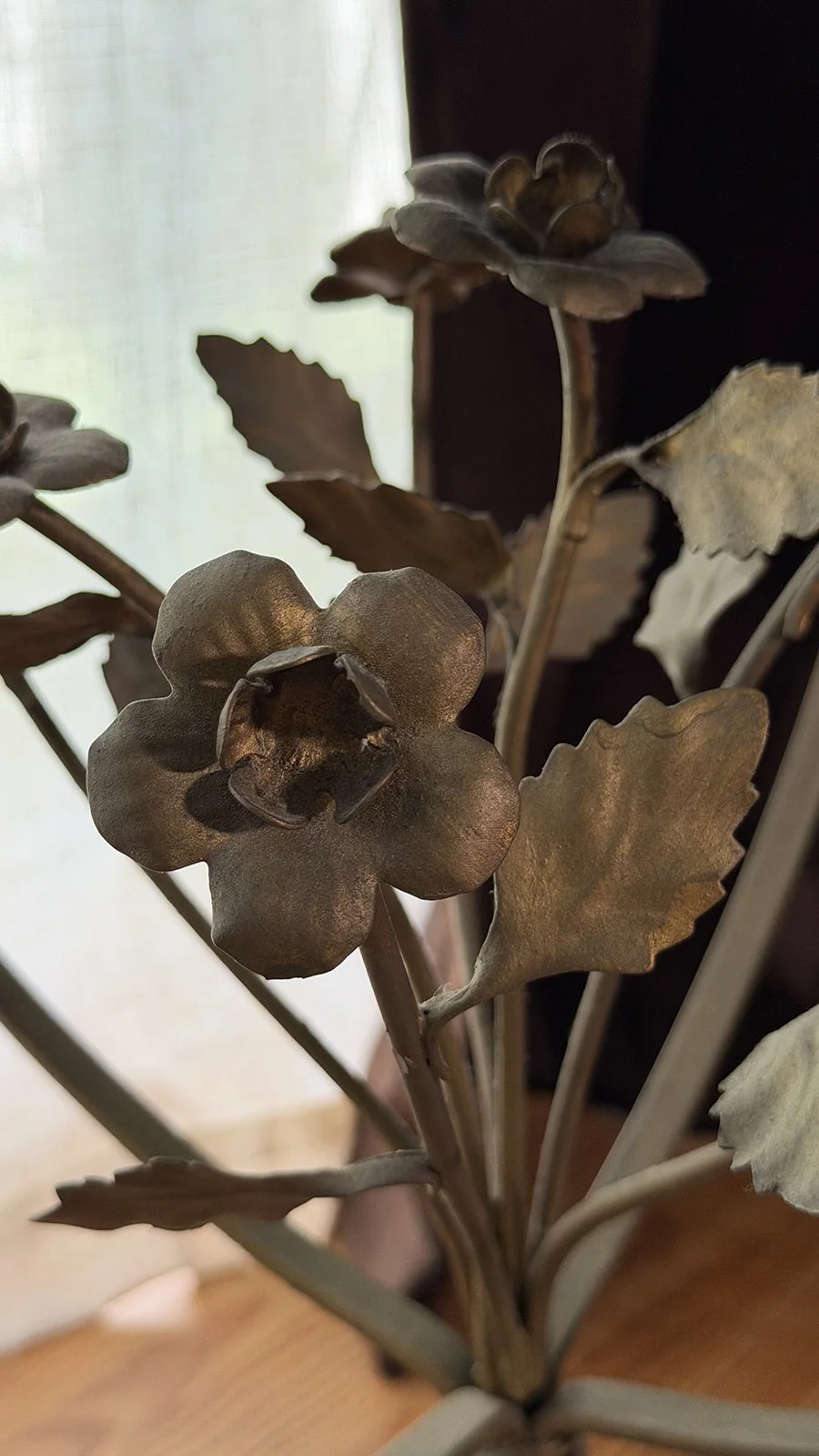
I was in Los Angeles when my grandparents passed, too far to be there for the clearing out of the house myself, and I still feel the absence of that, the chance to walk through those rooms slowly and choose by feel, the way you know almost instantly whether something belongs to a person or just belonged to their house. Some of what I would have chosen matched nothing in my own taste. It simply reminded me of them, and that was reason enough to want it near me. Instead I called out names over the phone from three thousand miles away, and hoped I was choosing well.
My aunt knew the kind of person I was, even then, and when the house was cleared out she sent what I asked for, the table, the painting, a small blow mold lamp from the basement bar, its bubbled plastic shade glowing warm even now. Not everything from that house came to me that way.
There is no warning before it happens. I will be looking through antique shop shelves of nothing in particular and something in the shape of an object will pull me straight back to a room I had not thought about in years, a memory I hadn't touched in decades, flooding back the moment I saw it again.
That was how the bottle found me. I saw one like it on a shelf in a thrift store, and something about it stopped me. I took a photo and sent it to my aunt, who has one just like it in her bathroom. It was the one that had belonged to my great-grandmother before she gave it to my grandmother, and that my aunt kept after they passed. I sent the photo half to show her the price and the age of it, half just to share in the find, the way you tell someone about something only they will understand the weight of. She must have heard the excitement in it, because she offered me the original without my needing to ask. Not that she isn't sentimental herself, but she knew my love of all things with history, and knew I would find more in it than she would.
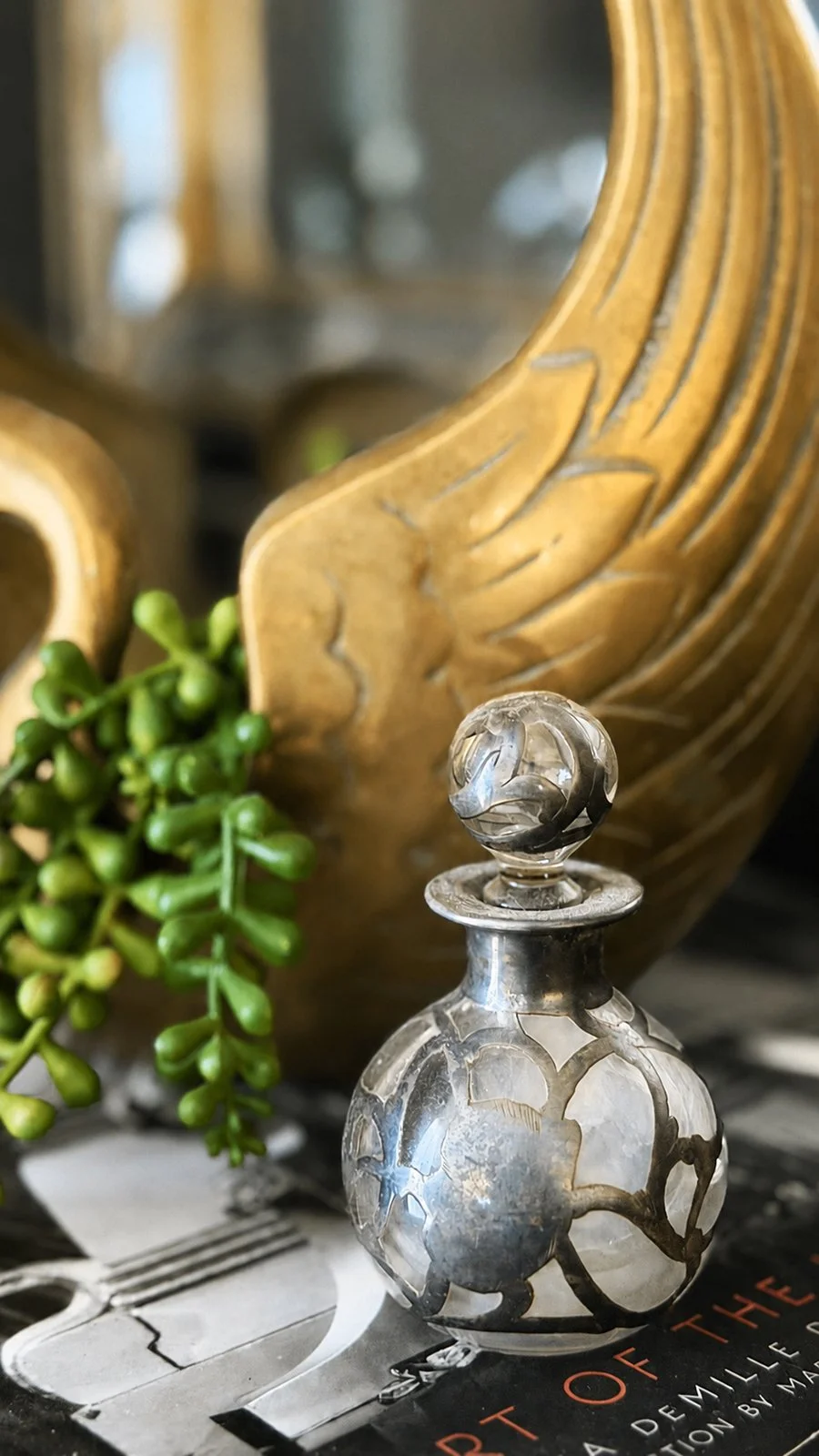
The table sits under a mirror in my living room now, and occasionally I still press the brass flowers down the same way I did as a child, feeling that same quiet give under my finger, though I have to bend down slightly to do it. One perfume bottle sits nearby in that vignette, and the painting hangs in my bedroom. A teddy bear that always held a special place is boxed carefully in my closet now, worth more than gold to me with all the time between then and now, packed the way you protect something from moths and the slow wear of age, not out for display, but kept exactly the way everything else in that house once was. Kept because someone decided it mattered, long before there was any reason to explain why.
That is the thing about antiquing that never quite gets said out loud. It is not really only about finding beautiful objects, though the beautiful ones are easy to love. It is about the moment an object you had forgotten hands you back a version of yourself you did not know you had lost. You do not go looking for that moment. It finds you, in a shop, among things that belong to no one you know, and for a second you are standing in a room that no longer exists, exactly as it was.
The table lives in a room built from the same instinct. Explore The Dark Study →
The painting lives in another. Explore The Antiquarian Bedroom →
Know where to hunt before the weekend.
A small edit of the estate sales, auctions, and shows worth knowing about. Free every Thursday.
