The Mirror Is Never Just a Mirror
A rectangular brass frame at a thrift store, daffodils and scrollwork carved deep enough to catch shadow from across the room. It was ornate without tipping into fussy, which is rare enough on its own. I picked it up before I had decided to buy it, and it was heavy. Genuinely heavy, heavy enough that I knew I was buying it before I had consciously decided to.
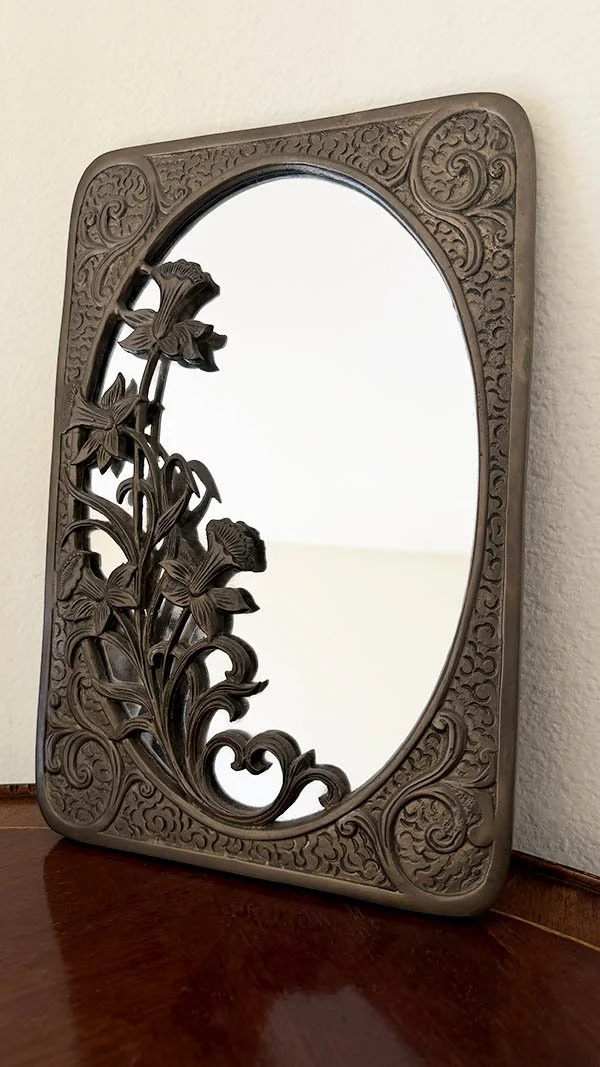
So many things feel disposable lately. One wrong tap and the screen cracks, one wrong step and the furniture wobbles. There is something settling about holding an object built with that much material in it. I do not know the mirror's actual age. But the carving has that Art Nouveau language of flowing lines and open flowers, and it is easy to imagine a version of this mirror hanging in a room decades before mine, catching someone else's reflection on their way out the door for the evening.
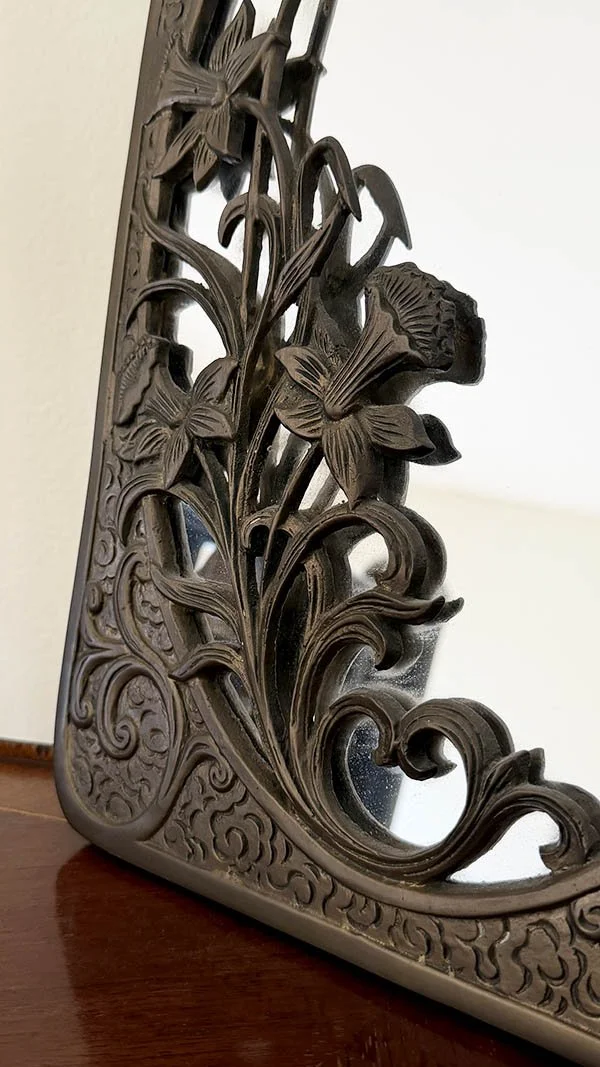
It is easy to treat a mirror like a fixture, something you check on your way past, and let the thought stop there. It is also an object in the room, showing you a second room, a reflected one, that changes with the light and the hour and everything you put in front of it. A painting holds a fixed composition. Hang a mirror and the frame is never finished. Whatever is across from it becomes part of the composition too.
I learned this the annoying way, by getting it wrong twice.
There is a wall in my bedroom where the afternoon light does something I genuinely love, low and warm, throwing soft shadows that shift as the day goes on. I hung a mirror on the opposite wall because it looked right there, and it did look right, until I noticed what its reflection was catching. The mirror faced the window directly, and it sent a streak of bright afternoon light across the wall where I keep paintings, a daily hit of direct light on pieces I did not want fading over time. The mirror itself was fine. The wall was fine. The angle between them, at that particular hour, was the part I had not thought to check before I drilled anything.
The second one was smaller but the lesson was the same. I wanted a mirror near my desk in the study, and it looked good hanging where I'd planned it, until I sat down to actually work. From my chair, the mirror caught the top edge of the window treatments in a way that bothered me every time I looked up. Nobody walking through the room would have noticed. I noticed, every single day, from the one seat where I actually spend time.
Both mirrors moved. One went to a wall with a plainer, calmer reflection. One got replaced by a painting where the sightline mattered more than I expected.
A few things worth checking before you commit to a wall, learned mostly by getting them wrong first:
Measure the glass itself, not just the outer dimensions of the frame. A deep or heavily ornamented frame can take up more wall space than it gives back in actual reflection. The daffodil mirror looks substantial from across the room, but its reflective glass is smaller than the frame suggests.
Hold the mirror in place before you drill anything, and look at everything its reflection is actually catching from where you'll normally stand: the ceiling line, the doorway, anything that might end up as the dominant reflected subject instead of a supporting one.
Give it a full day opposite a window before you commit. A spot that seems perfectly composed at ten in the morning can throw hard glare or an unwanted light streak by four in the afternoon. A mirror does not create light, it reflects the light already coming through the window, and the angle of that incoming sunlight shifts again as the seasons change, so the same wall in high summer can send that light somewhere different once the sun sits lower in the sky come winter.
When a mirror is going above a console rather than floating on an open wall, the furniture can set the centerline instead of the wall itself. The two relationships are different, and it's worth deciding which one you're actually working with before you measure anything.
Take the weight seriously too. A large mirror is often heavier than a print of the same size because of the glass, and existing hardware on an older frame is not something to trust without checking it first. Use hanging hardware rated for the actual weight, and confirm whatever attachment points the frame already has before assuming a single hook will do the job.
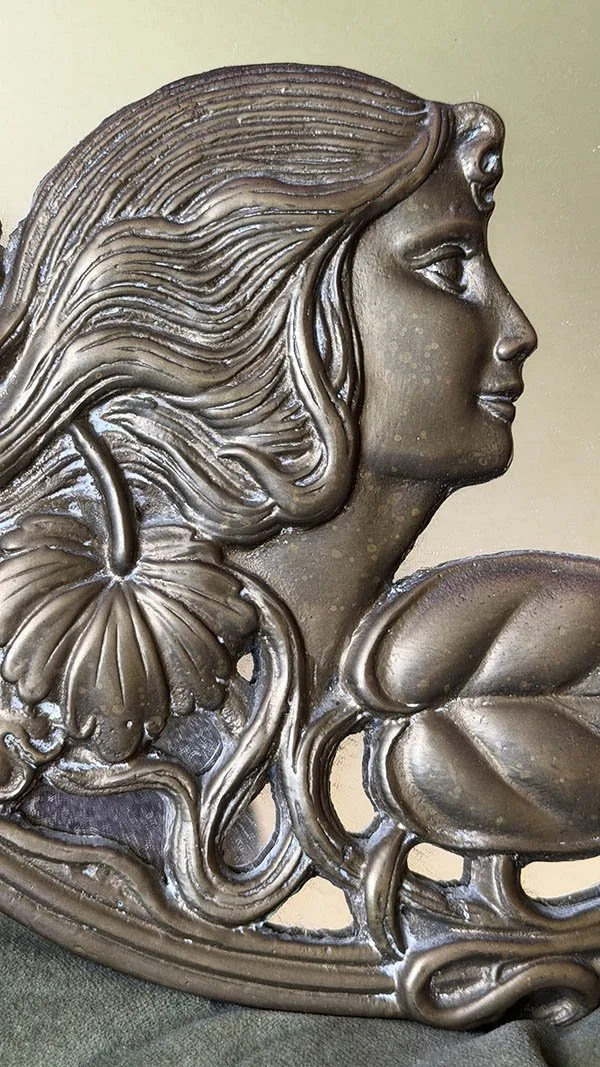
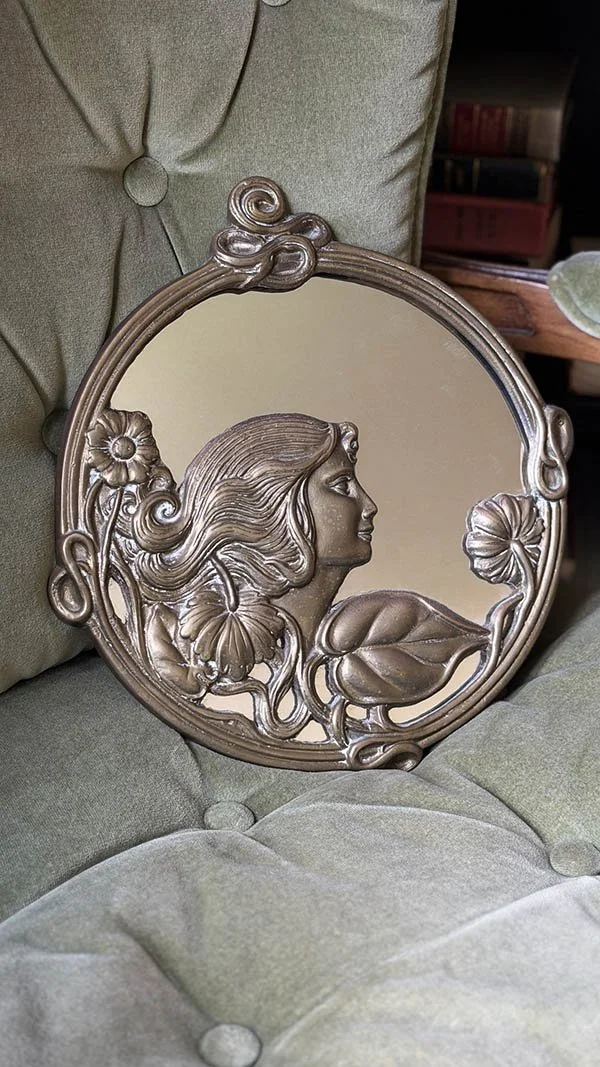
The daffodil mirror and the maiden mirror in this piece are both going into The Threshold, aged brass and heavier than they look from across the room. If you're building your own entryway around a piece like this, that collection is the place to keep looking. Worth a look too: the Sag Harbor doorway piece, if you're building out the rest of that entry.
Know where to hunt before the weekend.
A small edit of the estate sales, auctions, and shows worth knowing about. Free every Thursday.
