Moody Entryway Decor Ideas: What a Sag Harbor Doorway Gets Right
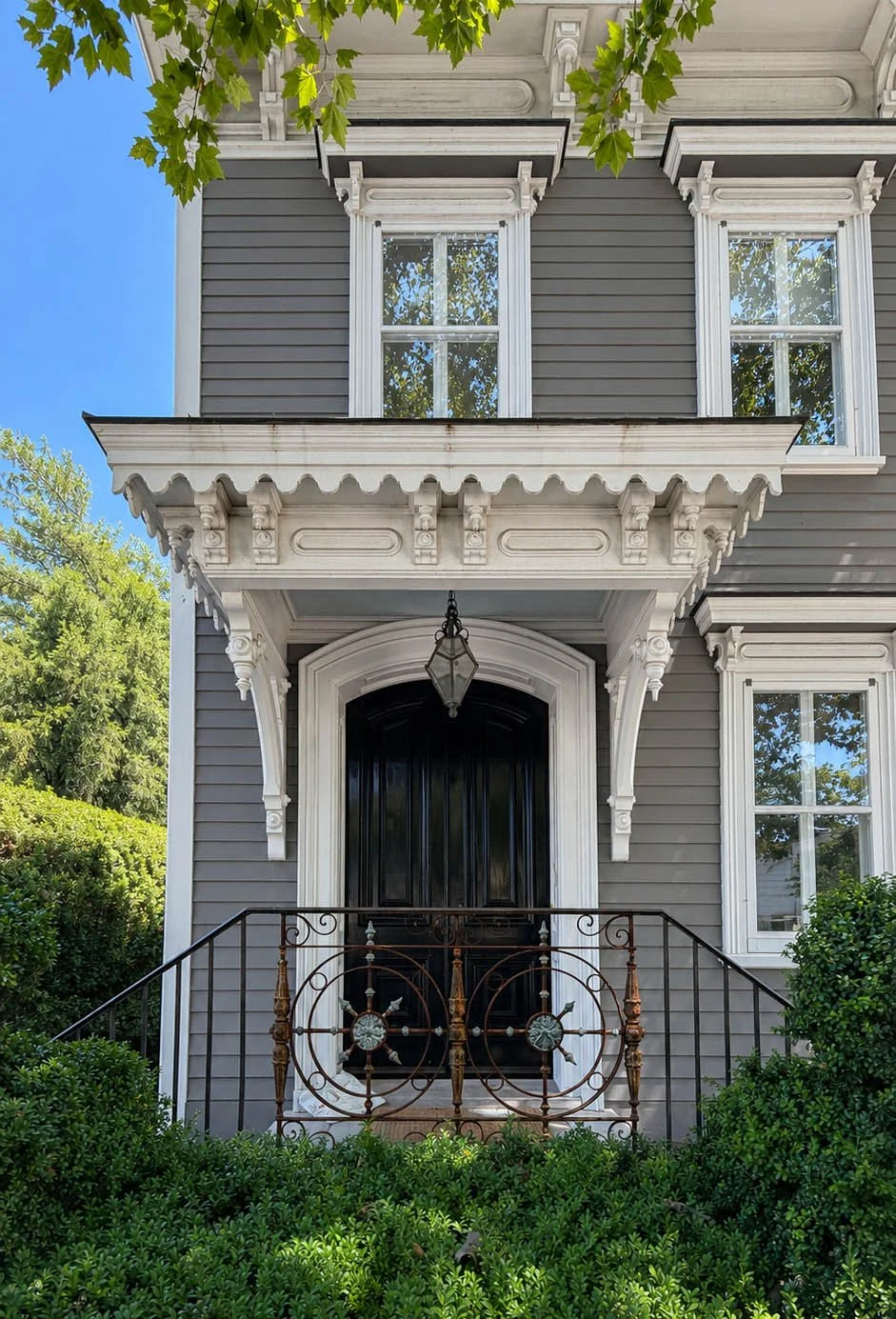
The gate caught my eye before the door did. I was across the street when I first noticed it, and even from that distance the rust read differently than the door behind it. Two iron circles, worn to the color of an old penny, set with starburst medallions that looked more like ship's instruments than fence ornament. The ironwork hadn't been repainted, hadn't been sanded down, just still standing. Behind the gate, the door was lacquered black, glossy enough to hold a reflection, and it was the door that did the real work: against all that shine, the rust on the gate read louder, every pit and flake of it visible in a way it wouldn't have been against white clapboard or a lighter wood. Above it, a scalloped Victorian awning threw a band of shade across the whole scene, brackets carved deep enough to hold their own shadows.
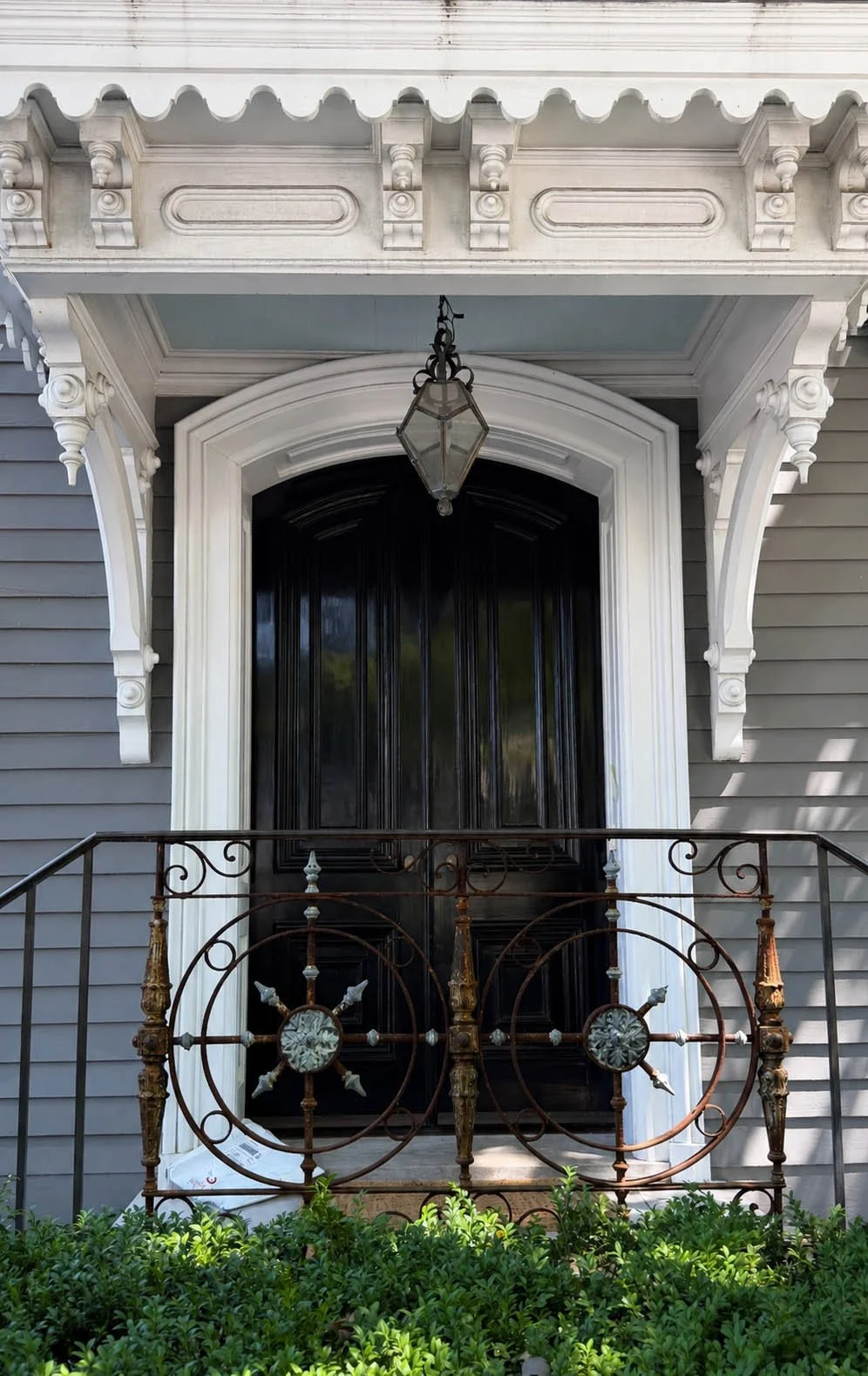
This one didn't look like a copy. It's what moody entryway decor actually looks like when nothing about it is new.
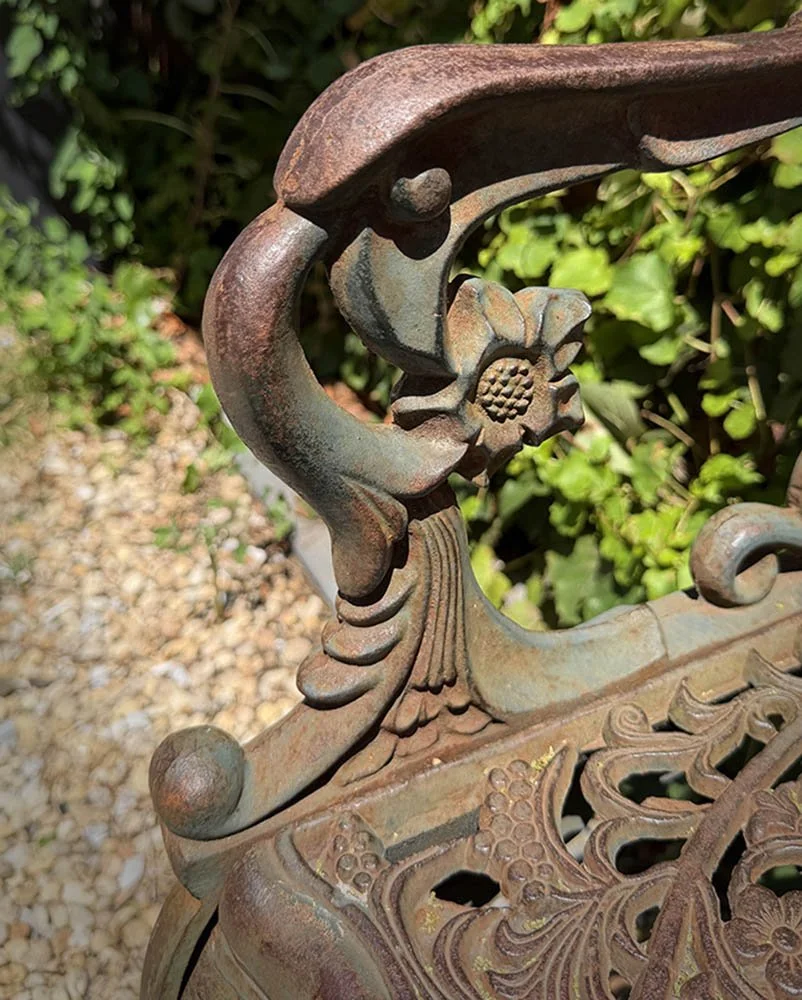
Walking the rest of the street, the pattern kept repeating, not in one material, but in shape. A garden bench with grapevines cast into the ironwork, a single flower blooming out of the armrest where a plain scroll would have done the job.
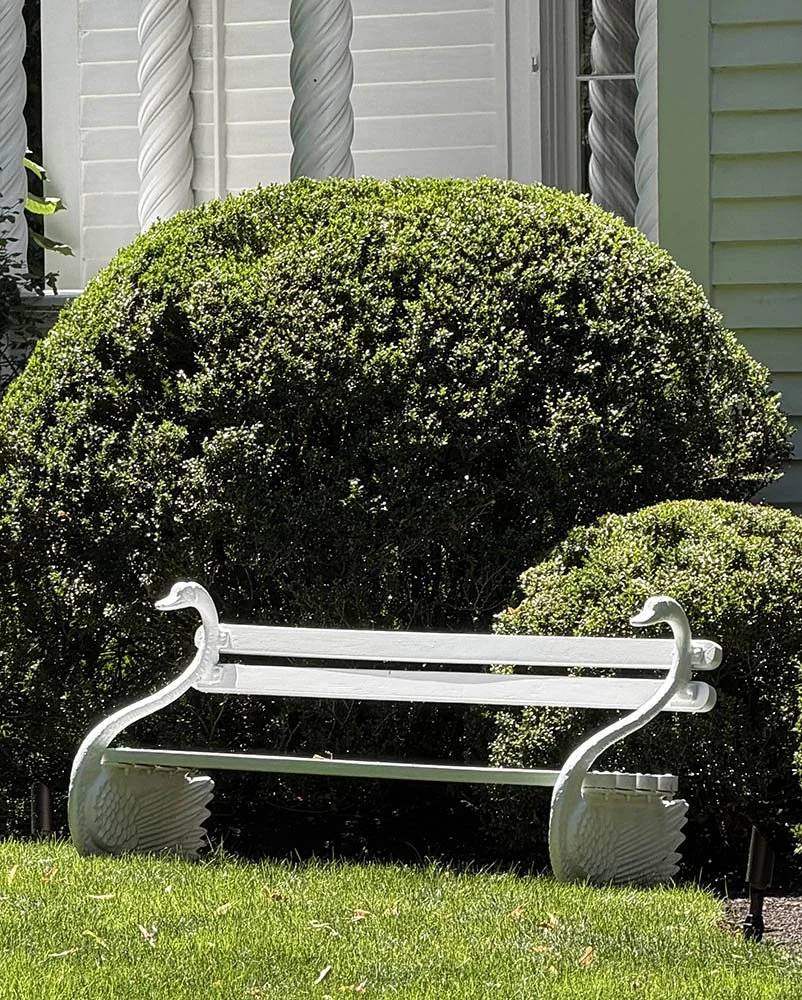
A pair of swan heads curving into a bench back, doing nothing structural, just being swans.
A gate built from ship's wheels instead of pickets. None of it matched. All of it was stranger than it needed to be.
It's worth naming the alternative, because it's everywhere and it's not wrong, just generic. A fleur-de-lis finial is a perfectly good finial. It signals a certain formality, it photographs well, and it could belong to any house on any street in the country. That's the trouble with it. You could find the same one in three finishes at any hardware store this weekend, and it would look exactly as good on a house two states away.
The fix isn't an overhaul. Most moody entryway decor starts with one piece, not a full replacement. Before you replace anything, look at what's already at your own door on repeat, the finial, the hinge, the house numbers, the light fixture, and ask whether it's actually interesting or just correct. If it's correct, that's the piece worth swapping. Estate sales and architectural salvage are better hunting grounds than any hardware aisle for this, because what you're looking for isn't a category, it's a shape nobody else thought to use there. A bird instead of a finial. A gothic mask instead of a knocker. There's a simple way to tell: would you want this object on its own, sitting on a shelf, even if it never went near a door. If yes, it earns the door. If it only works as hardware, it's still hardware.
The last piece is restraint, and it matters as much as the sourcing does. None of the Sag Harbor doors were trying to outdo the house next to them. The proportions stayed in line with the street, the palette stayed in the same register as the neighbors, dark, weathered, brass and iron rather than anything bright or new. What changed house to house was smaller than that: one hinge, one finial, one gate. That black door down the street still has its rusted circles and its starburst medallions, same as the day I saw it.
For more on building an entryway with that kind of presence, The Threshold collects the brass, iron, and aged materials that carry this register indoors and out. If gathering objects that don't match on purpose sounds familiar, Gallery Walls: How to Build One That Looks Collected works the same instinct into a different kind of wall.
Know where to hunt before the weekend.
A small edit of the estate sales, auctions, and shows worth knowing about. Free every Thursday.
