The Object No One Comes to See
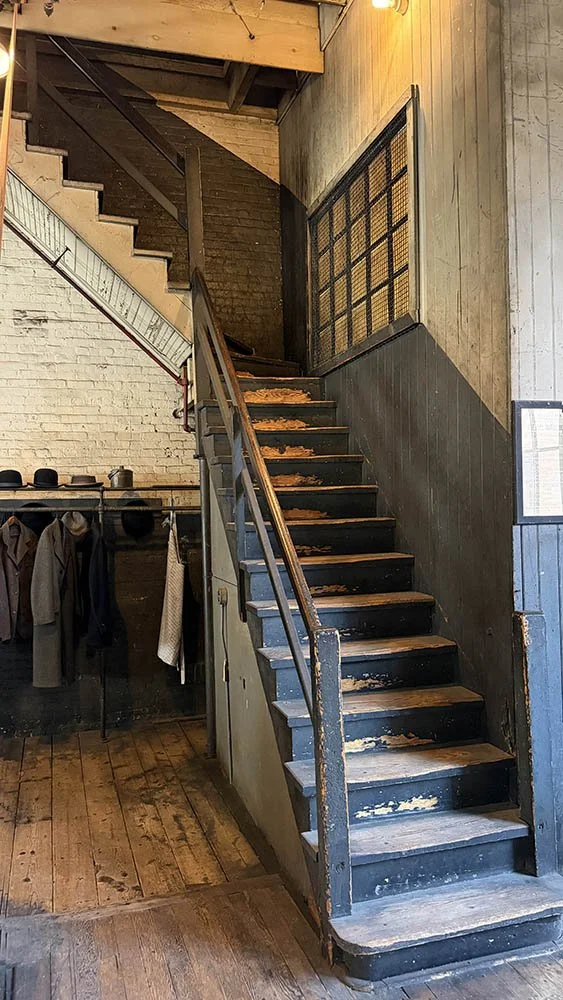
There is a building on Main Street in West Orange that I have been walking past since I was a child. My grandfather worked inside it, and I believe he oversaw a department that made automobile accessories, though I couldn't tell you exactly what, the details have softened with time the way family details do. A supermarket sat further down the block, and every trip there meant passing the long beige factory windows first. I did not know, back then, that the brick building across the street from it had belonged to Thomas Edison. I only knew that my grandfather went to work somewhere along that same stretch of road, the same way thousands of other men once did.
I went back recently, older now, and the building my grandfather may have worked in is still standing, though it holds apartments these days instead of machinery. Edison's laboratory across the street is a museum. I walked toward it thinking about my grandfather, the way you think about someone when you are standing in a place that once held his whole working life, even if you were never quite sure what that life looked like up close.
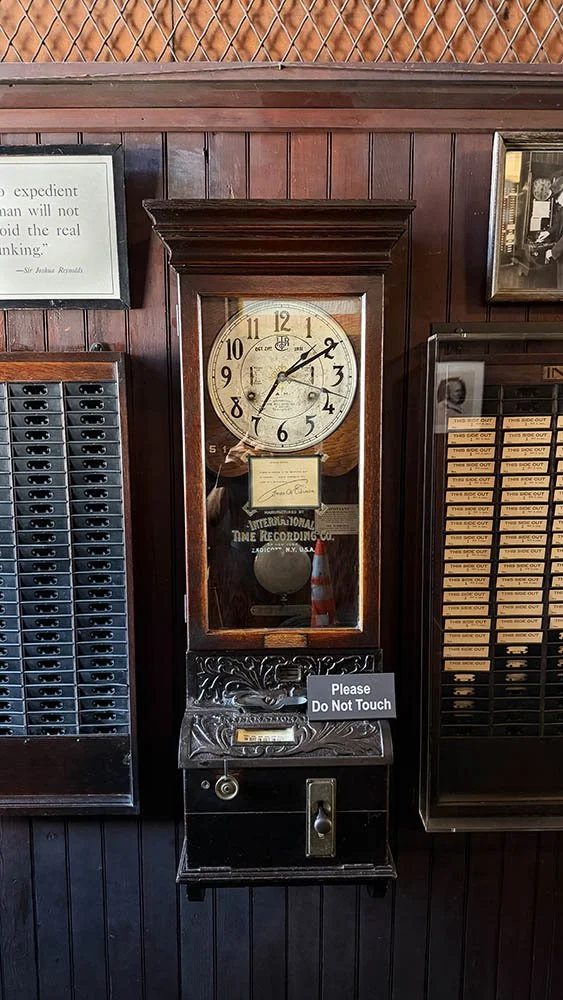
Just inside the entrance to the main lab building stands a tall wooden case, carved along its crown, glass front fogged faintly with a century of handling. Behind the glass is a punch clock. The face is cream colored and hand lettered, the numerals thick and confident in a way nothing on a screen is confident anymore. Two small dials sit above the hands, one marked Wound Up and Run Down, the other simply marked A.M. Below the face, a small typed notice is signed in looping ink: Thos. A. Edison. It concerns cigarette smoking in the laboratory. Anyone caught breaking the rule, it says, will be discharged.
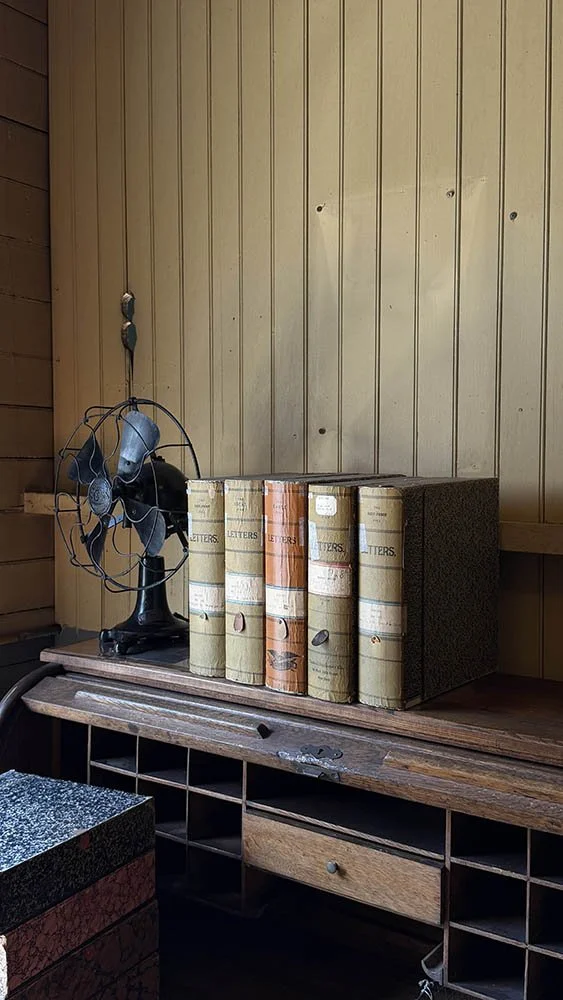
This is not the artifact most people come to see. Most people come for the first light bulb, the first phonograph, the desk left exactly as it sat on the day Edison stopped using it. Almost no one lingers at the clock where the workers punched in every morning, the fountain where a tired man might have taken a drink of water, the fan someone switched on during a hot afternoon with no other relief coming. These were never meant to be looked at. They were meant to be used and forgotten, the way ordinary things are used and forgotten every day, by people whose names nobody wrote down.
The clock face still reads October 21st, 1931. The private viewing for Edison, held at his family's home after he died on October 18th, took place on that exact date. Whether the clock stopped there on its own or was left there on purpose, standing in front of it means standing in front of the exact day an ordinary Tuesday for the men punching in stopped being ordinary.
What stayed with me longer than the date, though, was the craftsmanship. The carved crown on the clock case. The hand lettered face. The care in an object that existed purely so a man could log the hour he arrived and the hour he left. Nobody required that beauty. A flat metal box would have done the same job. I like to think someone decided the people using it, every single day, deserved something considered instead. I wonder sometimes whether a hundred years from now anyone will stand in front of what we left behind and feel what I felt in front of that clock.
I don't know exactly what my grandfather's days looked like in that building down the street. I know less than I would like to. But standing at that clock, I found myself imagining him anyway, walking in on some forgettable morning, doing work nobody thought to record, the same as every man whose hand once rested on that same brass lever. That not knowing didn't stop the feeling. If anything, it sharpened it. Whatever knowledge is missing, standing in that spot was enough to feel the shape of it.
Walking back to the car, I thought less about the inventions themselves and more about everything it must have taken to make them possible. Not just the wiring and the metalwork, but the entire quiet machinery of people behind it. Whoever kept that clock running on time. Whoever made sure a tired man had something to eat before his hands stopped being steady enough for the work. None of them are in the display cases. None of them have their names on anything. But they had families waiting for them at home, mornings that felt ordinary to live through, whole lives that never once felt like history while they were happening. It was, and because of what it created, it will always be.
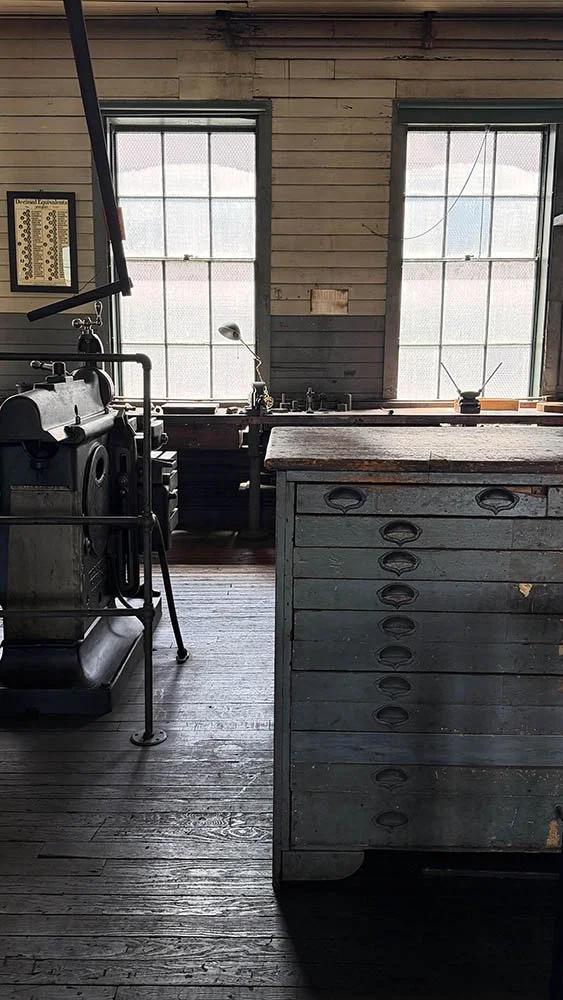
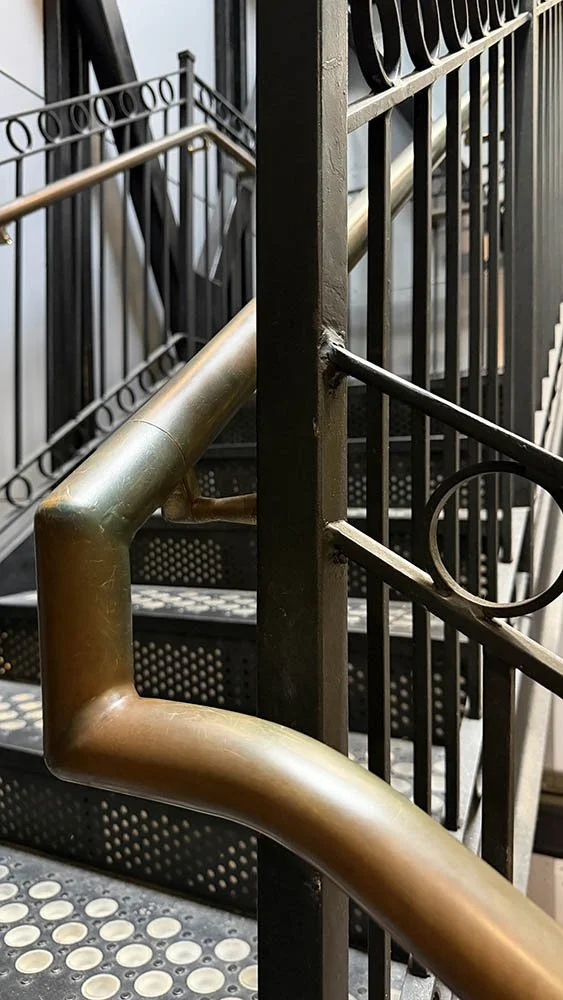
A clock case carved for no reason it needed to be. A room built to hold the same kind of care. Explore The Dark Study collection and see it, object by object. If a clock face can hold this much, it's worth a look at what belongs beside one too, in Art Deco Clock Garniture Styling.
Know where to hunt before the weekend.
A small edit of the estate sales, auctions, and shows worth knowing about. Free every Thursday.
